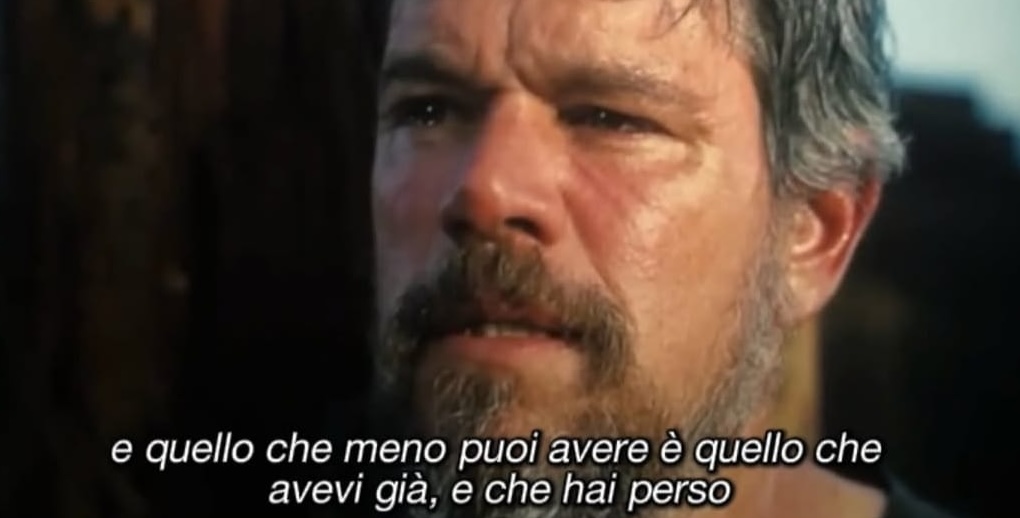
“…It told you what you most want is what you most can’t have and that the most you can’t have is what you already had and lost.
It was a song of all the promises I failed to keep. And it told me I don’t really want to go home.“
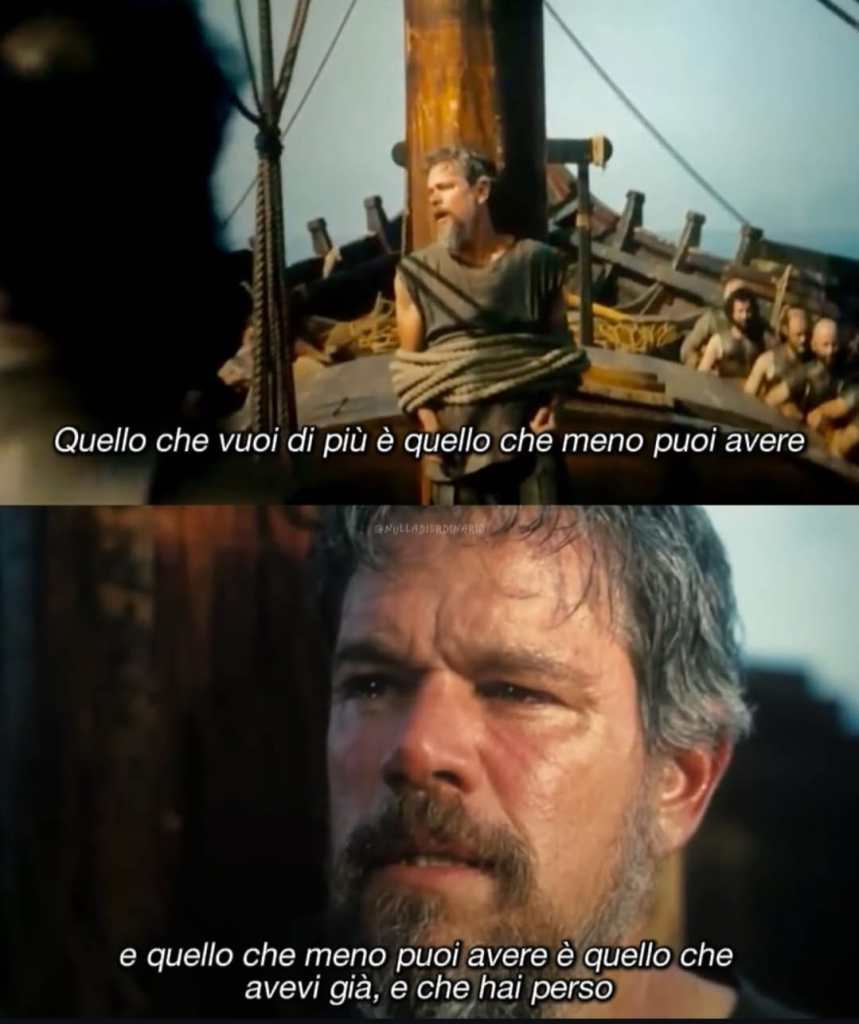
This is one of the most powerful lines from Christopher Nolan’s latest work.
Rather than adapting the Odyssey literally, Nolan chooses to reinterpret some of its deepest ideas, transforming them into something profoundly human.
The original passage from Homer’s Odyssey reads:
“Come here, renowned Odysseus, great glory of the Achaeans. Stop your ship and listen to our voices. No one has ever sailed past this place without hearing the sweetness of our song and leaving wiser than before. We know everything that the Argives and the Trojans suffered on the broad plain of Troy by the will of the gods. We know everything that happens upon the fruitful earth.”
The Sirens know everything. They know the past, the present, mankind… and every wound it carries.
In Homer, their temptation is not love, pleasure, or wealth…it is knowledge.
They offer Odysseus something no human being should possess: the chance to know everything.
Nolan begins with that very idea and transforms it.
If Homer’s Sirens know the world, Nolan’s Sirens seem to know the man standing before them.
They do not reveal the truth about the world. They reveal his truth.
They show Odysseus everything he has lost, everything he might have become, and everything he will never recover.
It is here that the legendary hero becomes tragically human.
During the Trojan War, Odysseus is the architect of the Wooden Horse deception. He believes it is the only way to end the war. Like so many tragic heroes, he keeps moving forward because he believes he is right… or perhaps because stopping would force him to confront the weight of his own choices.
But every war, even a victorious one, demands its price.
On his journey home, Odysseus gradually loses everything: his men, his ships, his glory, his peace of mind, and, little by little, himself.
Yet he continues pursuing a single goal: to return home.
Only when he faces the Sirens, in Nolan’s interpretation, is he finally forced to look inward.
They reveal the truth he has spent years avoiding: the thing he desires more than anything else can never be his again because he already possessed it… and failed to recognize its value until it was gone.
That is why the final line of their encounter is so devastating: And it told me I don’t really want to go home.
Not because Odysseus no longer loves Ithaca… but because he realizes that the home he longs for no longer exists.
After twenty years of war and wandering, it isn’t only Ithaca that has changed.
He has changed, and that, perhaps, is Nolan’s greatest insight.
The Sirens no longer represent only the absolute knowledge described by Homer. They become the voice of conscience… tangible, unmistakably human. Painfully human.
The voice that forces us to face ourselves without excuses.
The voice that reminds us of every mistake we made, even when, deep down, we already knew it was a mistake.
The voice that shows us, when it is already too late, the true value of what we once had and lost.
I believe everyone experiences a moment like this. A moment when we make a choice believing it is the right one.
We hide the truth. We omit it. We lie.
We make decisions for someone else, convincing ourselves that we are protecting them… or protecting ourselves.
But choosing for another person means taking away their right to choose.
Penelope, too, bears the consequences of Odysseus’ choices.
She fights a different kind of war… one of silence, waiting, and endurance.
Making mistakes is inevitable. They are part of being human.
What we should try to avoid is repeating those same mistakes once we know they are destroying us… and destroying the people we claim to love.
So I am left with one question: What happens when you realize that the thing you desired most was the very thing you already had… and lost?
Dedicated to everyone who realized too late that what they wanted most was already theirs… and they lost it. Because the deepest losses are not always the inevitable ones, but the ones we bring upon ourselves.
 Beyond Death
Lascia un commento