It is early morning. You have just woken up in a bed, whether it is your own, a friend’s, or one in a hotel where you happen to be staying for a few days hardly matters.
You lift your head from the pillow, rub your eyes, yawn and, after stretching for a while, get up.
You leave the bed and make your way to the bathroom. You step under the hot shower and relax, knowing that the usual day lies ahead of you.
Work, meetings, friends, smiles, arguments, and everything else that makes up the details of a life.
Perhaps your partner is there with you, your dog or cat, maybe even a few birds… or perhaps you are alone, and all you have are your colleagues and the relatives you make a point of keeping at a distance.
You have breakfast, perhaps a generous one because you woke up hungry… you leave the house, walk out through the hotel lobby, get into your car and head to work or to do the shopping.
You walk in, greet the people you know, smile. The day seems to be unfolding as usual…
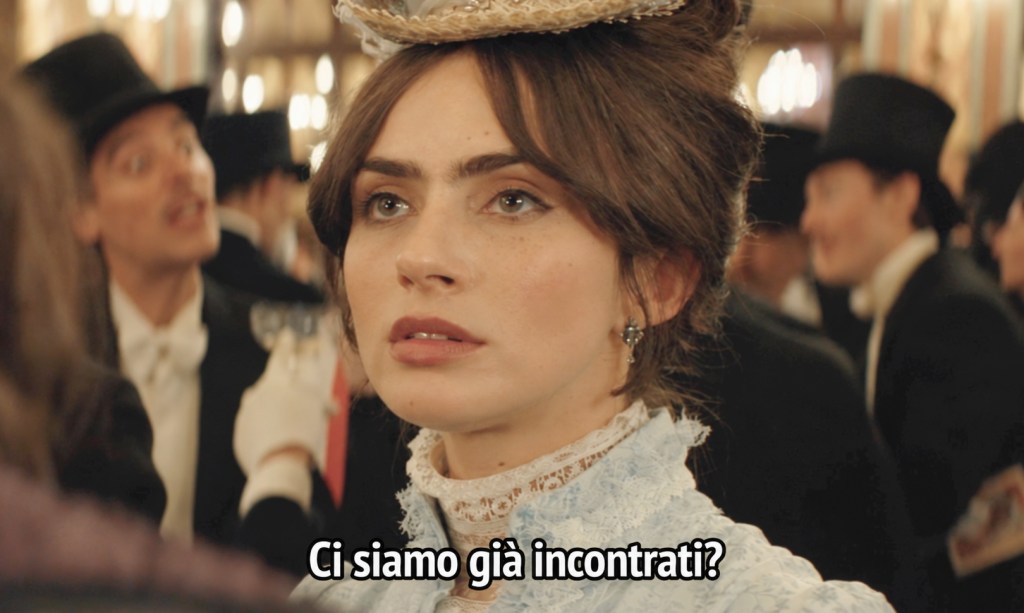
Then you turn around and there, in front of you, is a new face. Someone you do not know at all.
You introduce yourselves and, the moment your hands meet, time fractures.
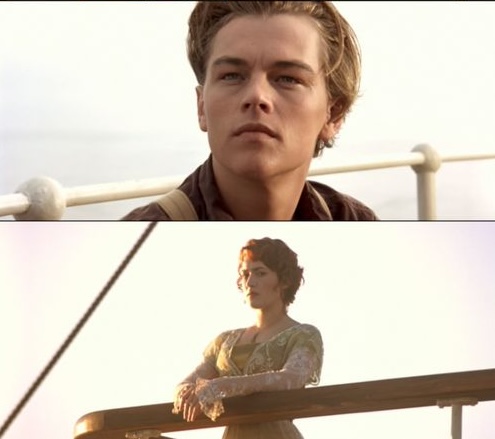
This is the point at which time seems to bend. I do not mean that it stops or slows down… time folds in on itself, curling into a foetal position, drawing its shoulders and knees together and closing its eyes, aware that it is about to tumble headlong into a destiny it will be powerless to stop.
Until a moment ago, life had been moving along a recognisable trajectory. Not necessarily a happy one, not necessarily the one we would have chosen… simply a road we knew.
It had a shape: a past behind us and, ahead, a future we could more or less imagine.
Then we meet someone, and something difficult to explain happens: for some reason, before that person has even had the time to actually change anything, we feel that something has already changed.
We do not know what it is… we do not even know whether what is happening will be good for us. We only know that something has folded in on itself, and that the line we had been walking along has suddenly crossed another line… and from that point onwards, the path can never be quite the same.
And it is a beautiful feeling, but a terrifying one.
Because however much we may choose not to follow that new road, we cannot pretend we never saw it. And suddenly, everything changes.
Human beings have come up with various explanations for this phenomenon. One of them is less mystical than you might expect: the human brain lives a few seconds into the future.
The brain does not simply wait for the world to happen and then interpret it. It is constantly anticipating what is about to happen. (That famous thing called anxiety… you know the one.)
This is one of the principles around which contemporary theories of predictive processing revolve. In other words, perception may not simply be a passive recording of reality, but a continuous comparison between what the brain expects and what it actually encounters.
This is why the unexpected has such extraordinary power.
And so an unexpected person, a handshake, an ordinary conversation, a smile, a glance can produce something resembling an “error” in our prediction.
The future we had unconsciously calculated no longer works.
Now it has to be rewritten.
And perhaps that strange vertigo we have chosen to call destiny begins precisely here… at the moment when the brain discovers that its prediction of tomorrow is no longer enough.
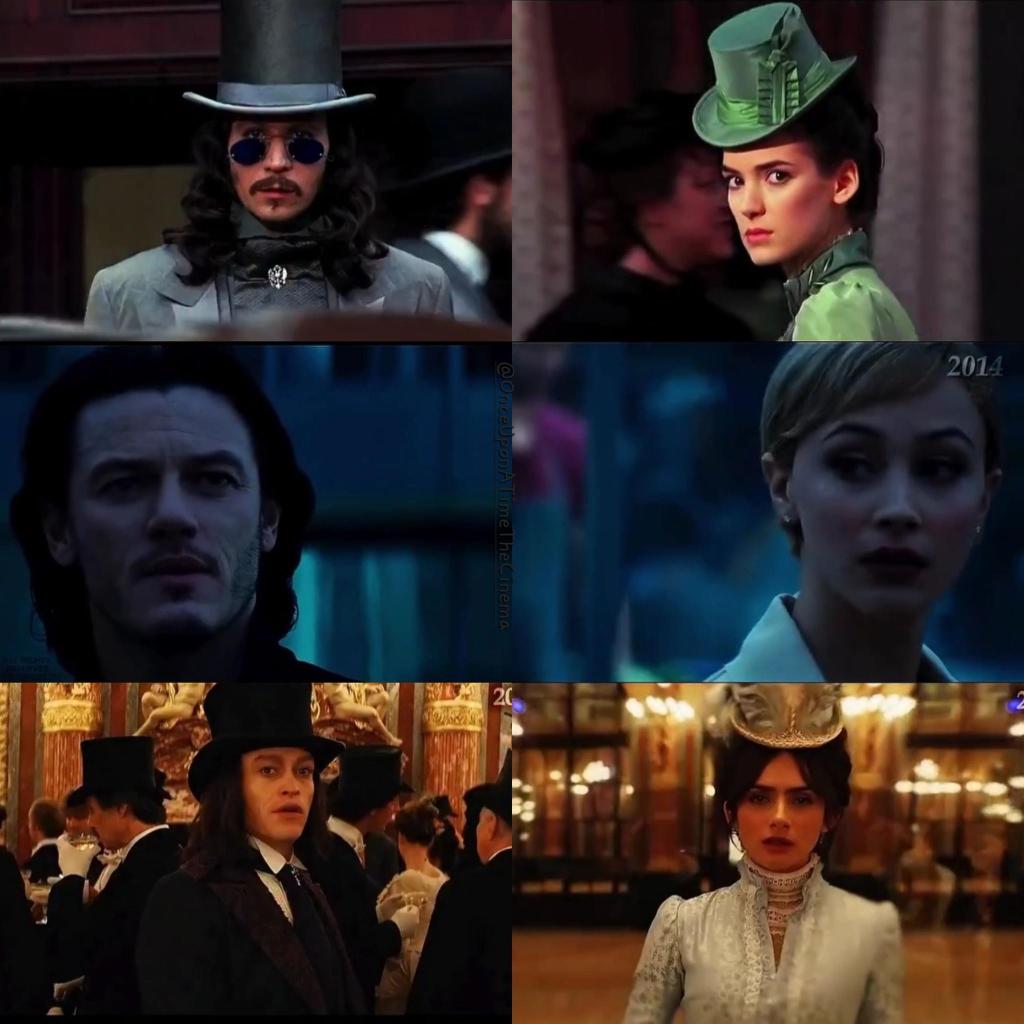
It all seems so perfect and clear, and yet, objectively, it fails to explain one thing: why, among the thousands of people who pass through our lives, do only a very few produce that feeling? Perhaps only one. Just one.
The answer I have given myself is that there are people who divide time.
Our memory is not a faithful archive.
It is impossible to preserve every day of our existence with the same intensity with which we lived it. Entire years can become indistinct, blurred, while a handful of seconds remain untouched for the rest of our lives.
So why that particular moment? Why that particular person?
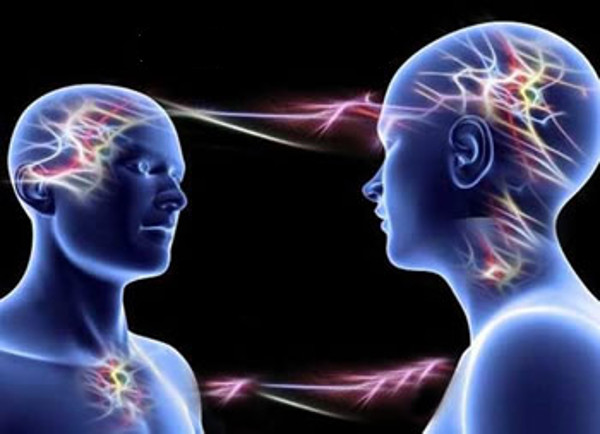
In quantum physics, there is a phenomenon known as entanglement. When two particles interact, they can remain linked in such a way that what we observe in one is correlated with what we observe in the other, even when they are separated by enormous distances.
It is as though, after encountering one another, they retain a connection that distance alone cannot simply erase.
Or perhaps… what if time does not flow in the way we think it does?
Physics itself abandoned long ago the intuitive idea of a universal time flowing identically for everyone.
With Einstein, space and time become part of a single structure: spacetime. Even simultaneity depends on the observer’s frame of reference.
And from this comes one of the most fascinating philosophical images in modern physics: the block universe.
In some interpretations of relativity, past, present and future can be understood not as three places created one after another, but as parts of the four-dimensional structure of spacetime.
This does not mean that the future is already written, and it certainly does not mean that relativity proves the existence of destiny, soulmates or predestined encounters.
But it does make us wonder: how much of our idea of “before” and “after” belongs to the universe itself, and how much belongs instead to the way our consciousness moves through events?
And so perhaps it is not really time that bends. Perhaps it is us, standing at a point of bifurcation.
We imagine our existence as a line because we can travel along only one possibility at a time. Every choice eliminates thousands of futures.
Whether or not to take that plane. Whether or not to answer the phone. To stay or to leave. To say yes or to say no.
Someone can enter our life and, without meaning to, reveal an existence we had never even considered possible. And this is where fear begins.
Not necessarily because we want that person, but because suddenly we see another version of ourselves.
A version who lives somewhere else and loves differently. Who leaves something of themselves inside another person. Who begins something new and who perhaps possesses the courage we never had.
Or who makes the very mistake we have spent our entire life trying to protect ourselves from.
That encounter does not necessarily show us a future. It shows us something far more unsettling: the knowledge that the future we had believed inevitable was never inevitable at all… and that is devastating.


Lascia un commento