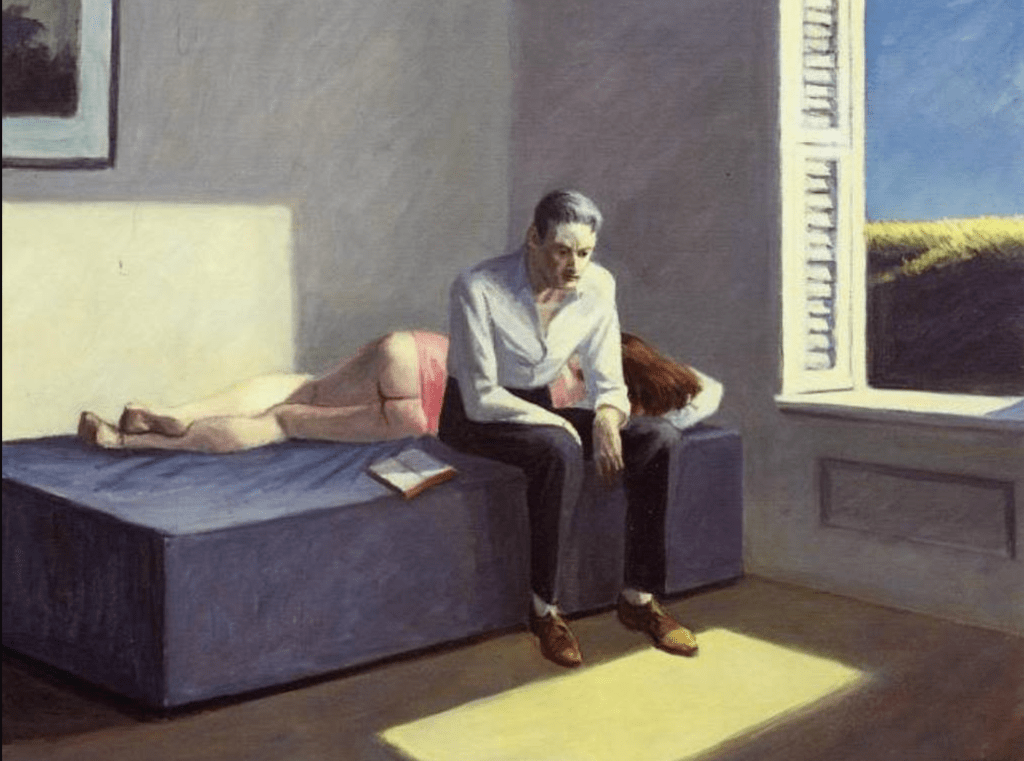
Achilles stops eating. Job curses the day he was born. Tristan loses himself, and Catherine lets herself die of grief.
They are all suffering, yet none of them says: Hey! I’m depressed.
Depression, as we understand it today, is a modern diagnostic category, but literature has always told us stories of men and women who stop wanting, eating, sleeping… participating in life… of people who withdraw from others, who are consumed by the vortex of pain, who can no longer imagine a future and who simply wish they could cease to exist, just so they would no longer have to suffer.
In the time of these characters, depression did not yet have the name by which we know it today, but literature was already familiar with all its shadows. It often explored them through the suffering caused by love, which, in great works of literature, is never merely the pain of a lost or impossible love, but becomes a way of exploring something deeper: loss, loneliness, abandonment… the loss of oneself.
Let us look at a few examples, in chronological order.
In the Iliad, after the death of Patroclus, Achilles is not simply a man in mourning.
He weeps, refuses to eat, and cannot find rest. He throws himself to the ground, covers himself in ashes and becomes, quite literally, imprisoned within his loss.
Then, at a certain point, he realises that the only thing left for him to do is return to battle and kill Hector. He knows that doing so will lead to his own death, but by then he no longer cares whether he lives.
Nothing seems to have value anymore when you feel alone, abandoned in the world, without purpose and as small as a grain of sand.
Homer understands perfectly that state in which losing someone seems to take away a part of the person who remains alive as well. He tells us about it and shows it to us without filters through the heroic figure of Achilles. A man, a hero, a demigod who can collapse… and who does.
Let us now turn to our religious tradition. In the Book of Job, the question is above all religious and philosophical: why must a righteous man suffer?
After losing his children, his possessions, his health and his position, Job goes so far as to curse the day of his own birth. He no longer simply wishes for the pain to end; he begins to imagine that it would have been better never to have been born at all.
How many ancient works have given voice to despair with such force and clarity?
Now let us move on to my beloved Middle Ages, when a long medical and literary tradition existed in which love itself was considered capable of making both body and mind ill. It saves and kills at the same time.
It was known as amor hereos: lovesickness, a condition that could cause insomnia, loss of appetite, pallor, obsession, physical wasting and disturbance of reason, even to the point of death.
And this is where we encounter Tristan. When Tristan loses Isolde, he instantly loses himself as well. The pain he feels invades both body and mind.
In the different versions of the legend, love leads to illness, physical decline and even the complete loss of reason. Tristan becomes a wanderer, moves away from his own identity and almost turns into another person.
In this masterpiece, it is clear that, for the medieval world, love is not always consolation, nor is it always salvation: it can also be a condemnation, a passion capable of turning into a genuine illness. The absence of the beloved then becomes something even more radical: a progressive dissolution of the self, because losing the other means losing a part of oneself.
At the end of the story, Tristan, believing himself to have lost Isolde’s love, allows himself to die; and when Isolde arrives and discovers that Tristan is dead, she too dies beside him. Eros and Thanatos thus become one… love as pleasure and pain, a force that keeps us alive and, at the same time, a force capable of leading us to death.
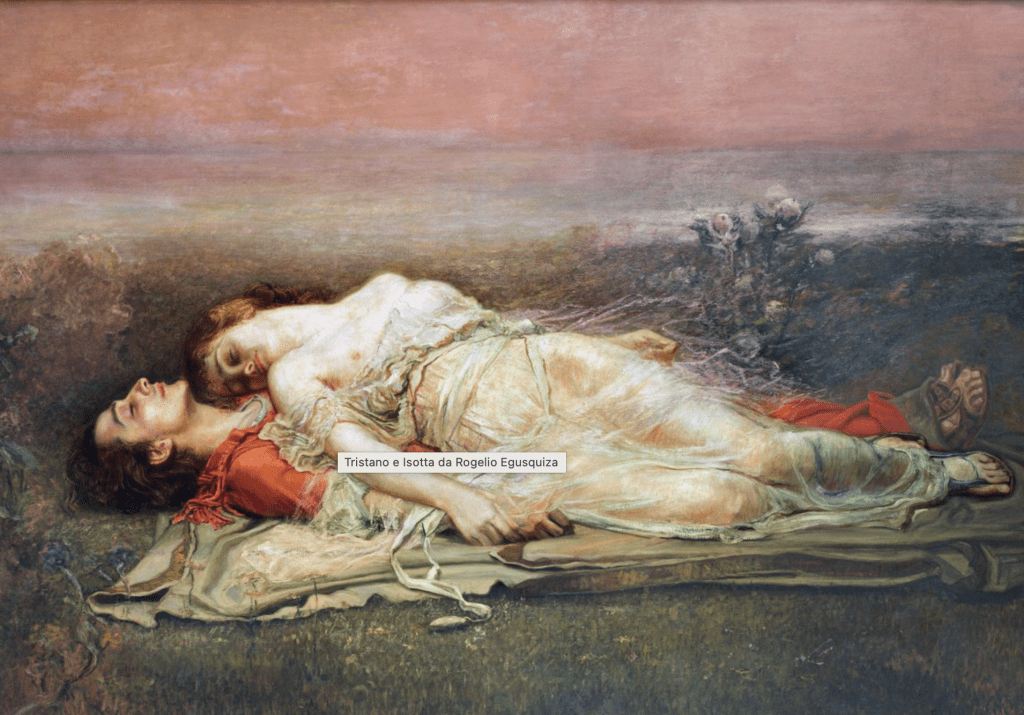
But let us turn to Isolde. Her suffering takes on different characteristics.
She bears the conflict between desire and duty, her marriage to King Mark, and the impossibility of openly living out her love for Tristan.
Hers is not necessarily the same progressive withdrawal from the world that we recognise more easily in Tristan. She is divided… and perhaps for this very reason, the two lovers represent two different forms of suffering: he tends to lose himself, while she is forced to live within contradiction until she is utterly annihilated when she finally loses Tristan, the most visceral and powerful part of herself.
Isolde feels like nothing.
A very similar story emerged from the pen of Emily Brontë in Wuthering Heights. In this masterpiece, the two protagonists, Catherine and Heathcliff, do not simply suffer because of an impossible love: both seem incapable of conceiving of their own identity as separate from the other.
“I am Heathcliff” and “Whatever our souls are made of, his and mine are the same,” Catherine declares, transforming love into something that belongs to the very structure of her deepest self.
They love each other and belong to each other, and when they are separated, both experience a suffering that invades the body as well. Catherine withdraws into herself, refuses food, becomes ill and passes through states of disturbance and despair.
After her death, Heathcliff falls into an obsessive grief that will last for years. He sleeps and eats less and less, gradually withdraws from the world and seems almost to long for death as the only possible way of being reunited with Cathy.
In her novel, Emily Brontë obviously never speaks of depression, nor does she diagnose her characters. Instead, she tells us something even deeper and more painful: that two people who lose each other may also lose themselves.
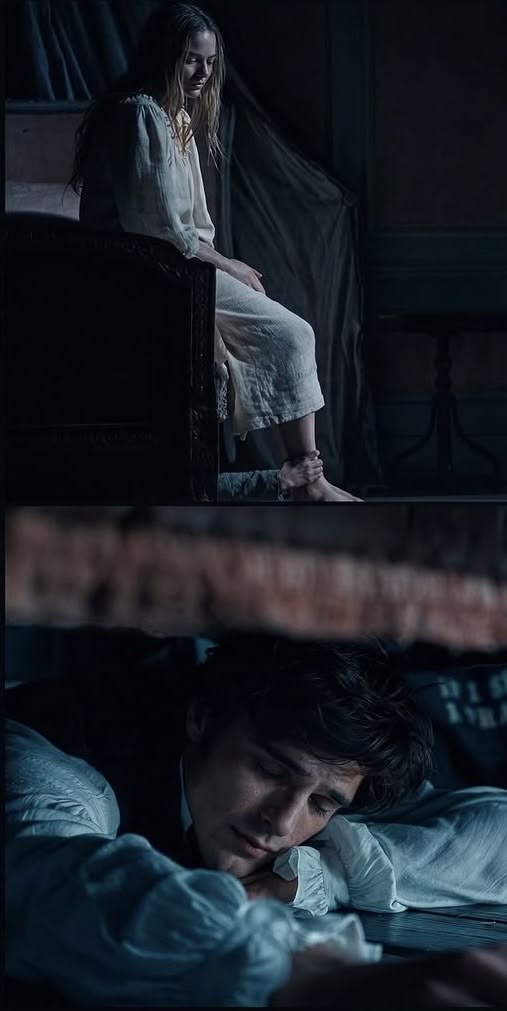
But the ancients had already understood something. They spoke of melancholia and associated it with the black bile produced by the human body.
Already within the Aristotelian tradition, a question was being asked: why do so many exceptional men in philosophy, politics, poetry and the arts appear to be melancholic?
And from this emerged an extraordinarily long cultural history that would eventually associate melancholy not only with illness, but also with intelligence, sensitivity and artistic creation.
Hamlet does not need to utter the word depression. He simply tells us that he has “lost all my mirth.”
Shakespeare has him describe how he has lost his joy and how the world, once wonderful, no longer gives him pleasure.
And so Hamlet isolates himself, broods, loses interest in the world, thinks about death and, above all, questions the very meaning of continuing to exist. Why live like this? What is the point? Is this how we are all destined to end, or are we simply trapped inside something that, sometimes, we are unable to understand?
Ophelia, too, suffers from a profound inner pain.
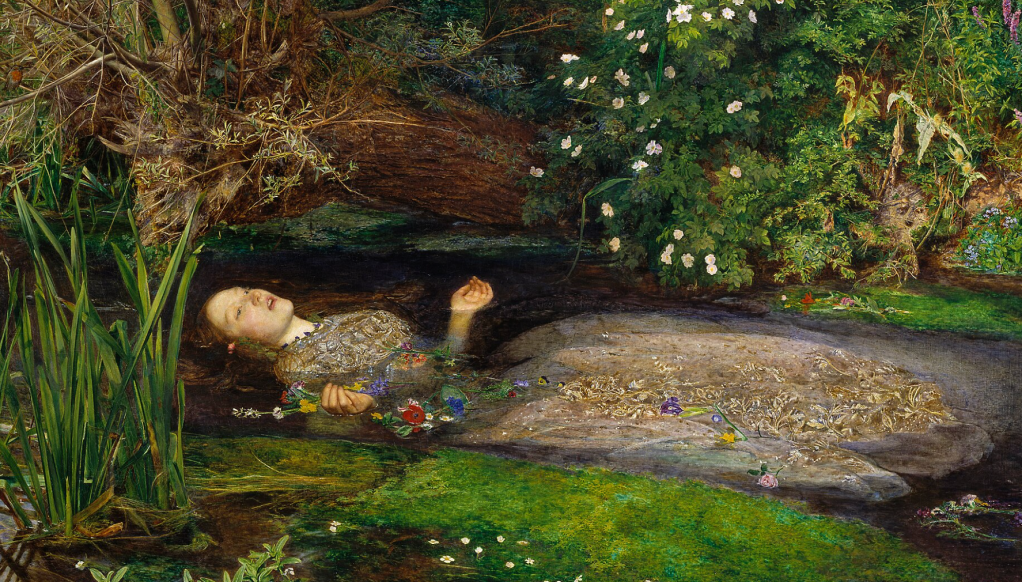
Ophelia loses everything: her father, Hamlet, every point of reference in her existence. She becomes like a wandering heart with nothing to hold on to, and in that aimless wandering, Ophelia loses control of herself and, in her delirium, allows herself to die in the water.
There are hundreds of examples throughout literature showing us that we are not alone in certain feelings. That humanity is also this: love and pain.
Emma Bovary discovers that reality can never live up to the life she had imagined, leaving her vulnerable and alone. Anna Karenina, meanwhile, becomes increasingly imprisoned by insomnia, jealousy, isolation and despair, until they lead her to the ultimate destruction of herself.
Being human does not mean being capable, every single day, of being strong, perfect and clear-minded, nor does it mean always being able to avoid pain or even contain it.
It is unrealistic to believe that we can work on ourselves so thoroughly that we can prevent ourselves from suffering, or stop ourselves from being swept away by a wave of pain.
We cannot control everything. Nor should we.
For centuries, literature has told us that suffering happens, that pain is part of the human experience and that, when it comes, it should not be ignored. Pain and depressive states must be looked straight in the face and acknowledged. We must enter into a dialogue with them until they lose their power and are finally ready to leave.
We must be the ones to wear them out, not the other way around.
Now, it is true that in literature many of these characters are overwhelmed by pain to the point of dying from it, but hey! It’s drama!
Reality is another matter entirely.
Before medicine found the words to describe it, literature had already learned how to tell the story of darkness… and that darkness is something we must not ignore.
When it comes, let us open our eyes, recognise it, ask for help if we need it and then… turn on the light. We are allowed to suffer without being ashamed of suffering, and we can learn to recognise that pain before it becomes too great to face alone.
If you are going through a period of darkness or depression, if you feel the need to scream out your pain, you can write to me.
If you feel that you might hurt yourself, do not remain alone with that thought: reach out to someone you trust or to a dedicated support service.
 Beyond Death
Lascia un commento