
When we think of the Middle Ages, we often picture dirty, sickly people, foul-smelling streets, and a complete lack of hygiene.
But was it really like that?
Let’s debunk a myth… In reality, personal hygiene was more common than we might think, though the practices were quite different from ours (which makes some of them seem rather unusual and, in some cases, ineffective). For example, it was common to wash “in sections,” meaning people cleaned only certain parts of their bodies daily—partly because, let’s be honest, the Middle Ages were cold everywhere, from peasant homes to grand castles!
Did People Actually Bathe?
Contrary to popular belief… yes, people did wash! Water was regularly used, especially for washing hands and face. The real issue was the quality of the water. It wasn’t always drawn from a clean source but often came from wells near houses or even from street-side water collections, making it prone to contamination.
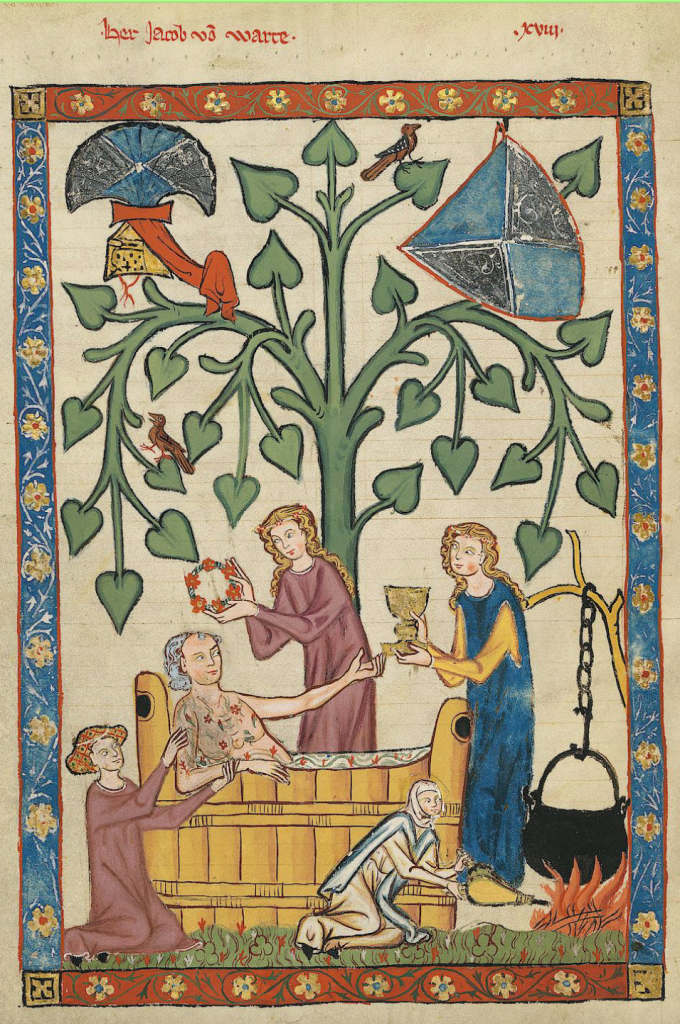
But fear not—public bathhouses existed (inspired by ancient Roman baths) and were widely used. Many people soaked in communal tubs, often filled with warm water. However, over time and with the spread of the plague, people began to fear that hot water opened the skin’s pores, making the body more vulnerable to disease. Additionally, these bathhouses gradually turned into open-air brothels, leading to their decline and eventual closure.
What About Their Teeth?
Another myth to debunk is that medieval people never brushed their teeth. In reality, oral hygiene was considered important! People used fibrous wooden sticks to rub their teeth and mixtures of ash, salt, and aromatic herbs (there were even liquid solutions, early versions of mouthwash).
Interestingly, the poor had healthier teeth than the wealthy. Why? Because their diet was low in refined sugars, while nobles indulged in large amounts of honey and candied fruits, which contributed to cavities.
For example, the discovery of Richard III’s skeleton revealed that he suffered from tooth decay—a common issue among kings and queens of that era.
Another widely practiced habit was sleeping naked.
Now, you might be thinking: “wait, didn’t you just say that the Middle Ages were freezing, and yet people slept naked?”
Yes, indeed!
This practice had less to do with comfort (which, to be fair, wasn’t exactly great) and more to do with protection against parasites like fleas and lice. People would slip into bed completely naked but wear a sleeping cap to prevent parasites from infesting their hair.
Clothes were often inspected and aired out to reduce the presence of insects, which thrived in the folds of fabric.
Additionally, underwear was changed more frequently than outer garments—wearing clean undergarments was not only a sign of good hygiene but also of social status.
Medieval People Weren’t As Filthy As You Think!
So, were people in the Middle Ages really as dirty as we imagine? Not quite!
Sure, there were no daily showers or deodorants, but personal hygiene was still a concern. Some wealthy individuals suffered from dental problems due to their diet, but they knew how to clean their teeth. And sleeping naked? A clever trick to keep pesky parasites at bay.
Of course, this topic is vast, and we’ve only scratched the surface here. If you’re interested, we can dive deeper into these fascinating details in a part two!
Like this? Support my work on Ko-fi and help me tell the stories no one else dares to: https://ko-fi.com/elizabethrasicci

 Beyond Death
Scrivi una risposta a The Truth About Cleanliness in the Middle Ages – The New Murrey and Blue blog Cancella risposta