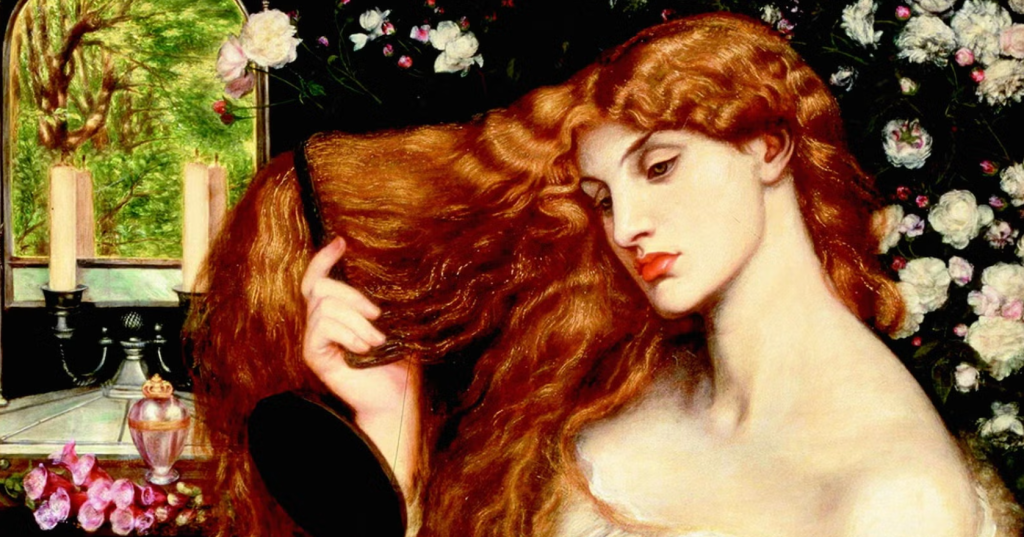
There is a figure that keeps resurfacing in books, discussions, astrology, and modern reinterpretations of history. Her name is Lilith, and she seems to change face every time someone tells her story.
Now… a clarification is necessary right away, because over these thousands of years an incredible number of legends have been built around Lilith. If we tried to put them all together, it would be quite the trip with no return.
Many people believe Lilith is a central character in the Bible, the famous “first wife of Adam.” But if we actually open the Bible and look for her, we discover something rather curious: Lilith appears only once.
Specifically in the Book of Isaiah, in a passage describing desolate places inhabited by wild animals and creatures of the night. Among these presences appears the Hebrew word lilit, often translated as “night creature.”
That’s it. No rebellious wife, no escape from Eden, no cosmic drama. Just a brief reference to a nocturnal being.
So where does the whole story come from?
One of the reasons the myth of Lilith took hold lies in a rather curious detail in the creation story. In the first chapter of Genesis we read:
“So God created mankind in his own image;
in the image of God he created them;
male and female he created them.”
This passage appears in Genesis 1:27, and shortly afterward comes another account, in Genesis 2:21–23:
“The Lord God made a woman from the rib he had taken out of the man, and he brought her to the man.
Then the man said: “This time she is bone of my bones and flesh of my flesh; she shall be called Woman, for she was taken out of Man.”
That phrase from Adam, the first man, “this time…”, almost suggests that perhaps there had already been a first attempt that didn’t quite work out for one of them.
In the first passage (1:27), man and woman are created together, at the same moment.
But a few verses later, in the second creation account, the story changes: the woman is created from Adam’s rib.
This apparent contradiction led, in later centuries, to a rather intriguing question: what if the woman created alongside Adam was not Eve?
And it is precisely in the Middle Ages that someone attempts to fill this narrative gap.
In a text known as the Alphabet of Ben Sira, the story appears for the first time that many people know today: before Eve, God created Lilith.
The difference between the two women is crucial. Eve is created from Adam’s rib, therefore she is literally part of him, an extension of him.
Lilith, on the other hand, is created from the same earth as Adam.
They are made in exactly the same way.
According to the story, when Adam demands to dominate her, Lilith is not exactly thrilled with the idea. In fact, she decides she has no interest in it whatsoever and refuses to submit.
“She said: ‘I will not lie beneath you.’
And he said: ‘I will not lie beneath you either, but only above you.
For you are fit only to be below, while I am meant to be above.’”
At that point something interesting happens. Lilith, furious, pronounces the name of God and leaves the Garden of Eden.
And what happens then?
Could they simply let her go and admit the mistake? Could they accept that everyone has the right to choose for themselves, that a woman might refuse?
Could they say: “You know… God, maybe I treated her badly”? Of course not.
Instead, the woman who refuses to obey suddenly becomes a demon.
In later traditions the figure of Lilith grows darker and darker. In Jewish mysticism she is described as the companion of the dark angel Samael ( the angel of death and judgment, often depicted as blind, blind before death and judgment itself) and she becomes a kind of queen of demons.
During the Middle Ages people even believed that Lilith attacked newborn children during the night and caused men’s nocturnal emissions, deliberately collecting their seed in order to generate other demons.
For this reason amulets were hung in houses to protect cradles, and men, from her.
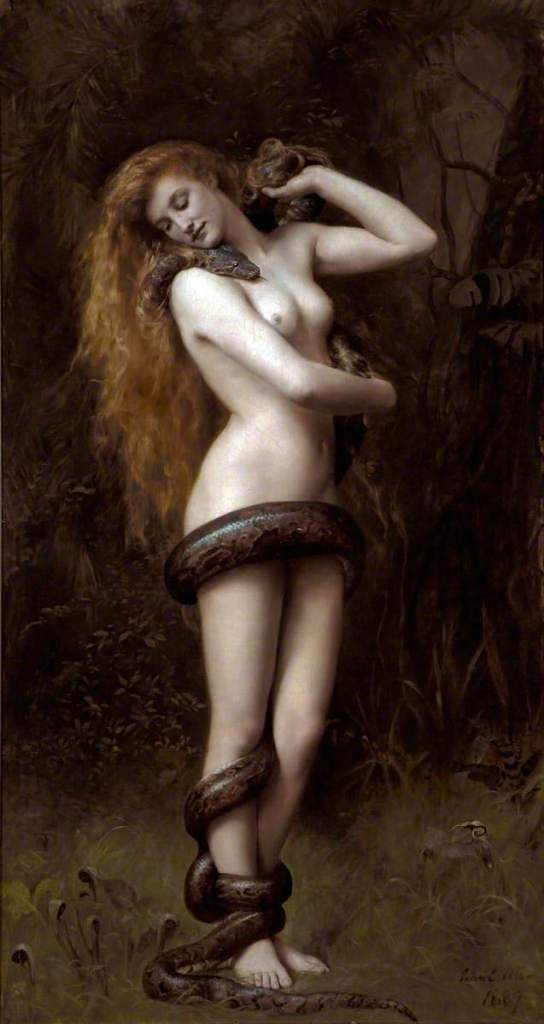
Now, if we think about it for a moment, the dynamic is quite interesting: a figure who says “no” to the established order is gradually transformed into something monstrous.
And at this point it becomes natural to step outside the realm of myth and into history.
Because this mechanism does not apply only to legends. It happens to real historical figures as well.
Take Richard III, for example. For centuries he was portrayed as a monster: a tyrant, a child murderer, a twisted villain hungry for power. Much of this image was created by Tudor propaganda and later immortalized by Shakespeare, who somehow turned it into accepted historical truth.
Or consider Marie Antoinette. Even today many people remember the phrase: “Let them eat cake.”
The problem is… she never said it. But revolutionary propaganda needed a symbol of the arrogance of the Ancien Régime, and that phrase worked perfectly.
Or Anne Boleyn, accused of witchcraft, incest, and treason in a politically constructed trial when Henry VIII needed to get rid of her.
The mechanism, in the end, is always the same.
When a figure becomes inconvenient, or when a new order needs to legitimize itself, a monster is often created.
Lilith represented a woman who refused submission.
Richard III represented a defeated king who needed to be delegitimized.
Marie Antoinette became the perfect symbol of aristocratic excess.
Anne Boleyn suddenly became a witch when the king decided he no longer needed her.
In all these cases the story follows a familiar pattern: first a myth is created, then it is repeated long enough to become reality… and in the end the monster remains.
But sometimes it is worth stopping for a moment and asking whether that monster ever truly existed.
Lilith was never really a demon. She may simply be the very ancient memory of a woman who said “no.”
And history is full of figures, real or legendary, still waiting to be freed from the shadows that were built around them.
Because very often demons are not born from evil.
They are born from propaganda, power… and a certain worldview that decides who must obey and who must be turned into a monster.
 Beyond Death
Lascia un commento