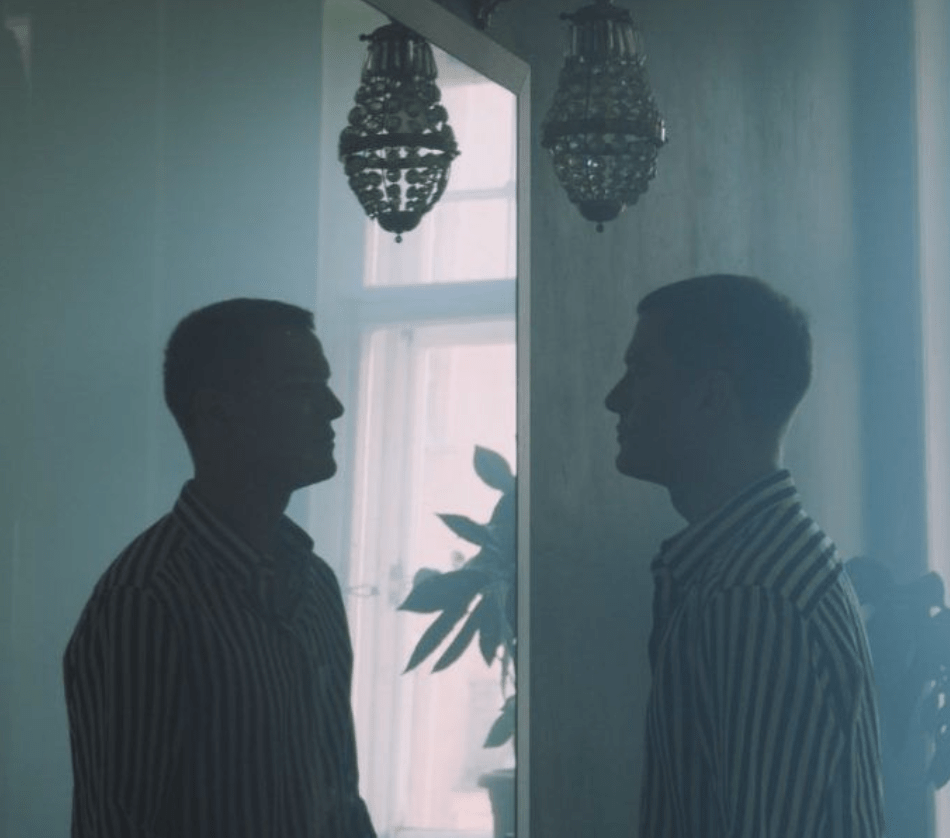
It happened again.
I was in the kitchen, holding my cup of coffee. I heard a name, I’m not sure where it came from, maybe the TV, but it struck me. It felt like I already knew it. And right after, that clear and unmistakable sensation: I had already lived this moment, exactly as it was.
The way the name was pronounced, the feeling it gave me, the position I was standing in, the light reflecting on the wall, everything felt strangely familiar, as if I were replaying a scene already written somewhere else.
There’s a moment when reality cracks. Like a slip in time, when something crosses your mind and whispers: “Wait… this already happened.”
A glass falling. A phrase spoken. The afternoon light. Everything is completely ordinary, and yet, inside you, there’s this certainty that the scene, the sensation, already passed through your skin, your mind, in a time you can’t quite name.
This phenomenon has a name: déjà-vu. And for centuries, we’ve wondered where it comes from.
Science defines it as a “memory error”: a false perception of familiarity. The brain, for a brief moment, records and interprets the same event twice, giving the illusion of memory. Theories range from small neurological misfires to temporary glitches between perception and awareness. But despite all the research, no one has fully explained why it happens.
And maybe that’s why cultures around the world have always seen something deeper in it.
In Hinduism, déjà-vu is seen as a memory from a past life. The soul lives many lives, and fragments of those existences sometimes surface. A place, a word, a feeling, they might all be karmic echoes.
In Buddhism, déjà-vu is connected to vasana, deep mental impressions, patterns of the soul that resurface when we reach a sensitive point on our spiritual path. It’s not chance, it’s a passage.
In Jewish Kabbalah, the soul can reincarnate, and a déjà-vu might be a sign: in that place, in that moment, you have walked there before. And now it’s time to complete what was left unfinished.
In traditional Christian thought, déjà-vu was viewed with suspicion. It could be a trap of the devil, a deception. But for certain mystics, it was a sign, angelic memories, calls to spiritual alertness.
In Sufism, déjà-vu is seen as a crack in perception through which we glimpse a moment already written by Allah. A divine whisper, a sign that you are exactly where you are meant to be.
In Celtic and shamanic traditions, déjà-vu is a sign that the spirit has already visited that moment… in dream or trance. It’s a temporal fracture where worlds touch.
In modern culture, déjà-vu has taken on new faces:
- A Matrix error (yes, like the black cat that meows twice)
- A glitch in the system
- A genetic memory
- A fragment of the collective unconscious
Different ways to say the same thing: we can’t ignore it.
Maybe déjà-vu is nothing more than a threshold. A small crack in time where something eternal peers through. A call. And maybe we are older than we remember…
When it happens to me, I stop and listen. I try to squeeze my mind into that split second and dig into what the memory has offered me, clues, feelings, traces that never truly left me.
And you? What do you think time is trying to tell you… when it stumbles?
Like this? Support my work on Ko-fi and help me tell the stories no one else dares to: https://ko-fi.com/elizabethrasicci
 Beyond Death
Lascia un commento