
If I were to mention these two names: Richard III and Harald Sigurdsson, you might not immediately see why I have chosen to place them together in the same sentence.
And yet, these two kings have far more in common than one might imagine.
History is filled with rulers whose greatness was overshadowed by the propaganda of their victors. Among them, two figures stand out with striking parallels: Richard III of England and Harald III Sigurdsson, known as Harald Hardrada, King of Norway.
But what are these parallels?
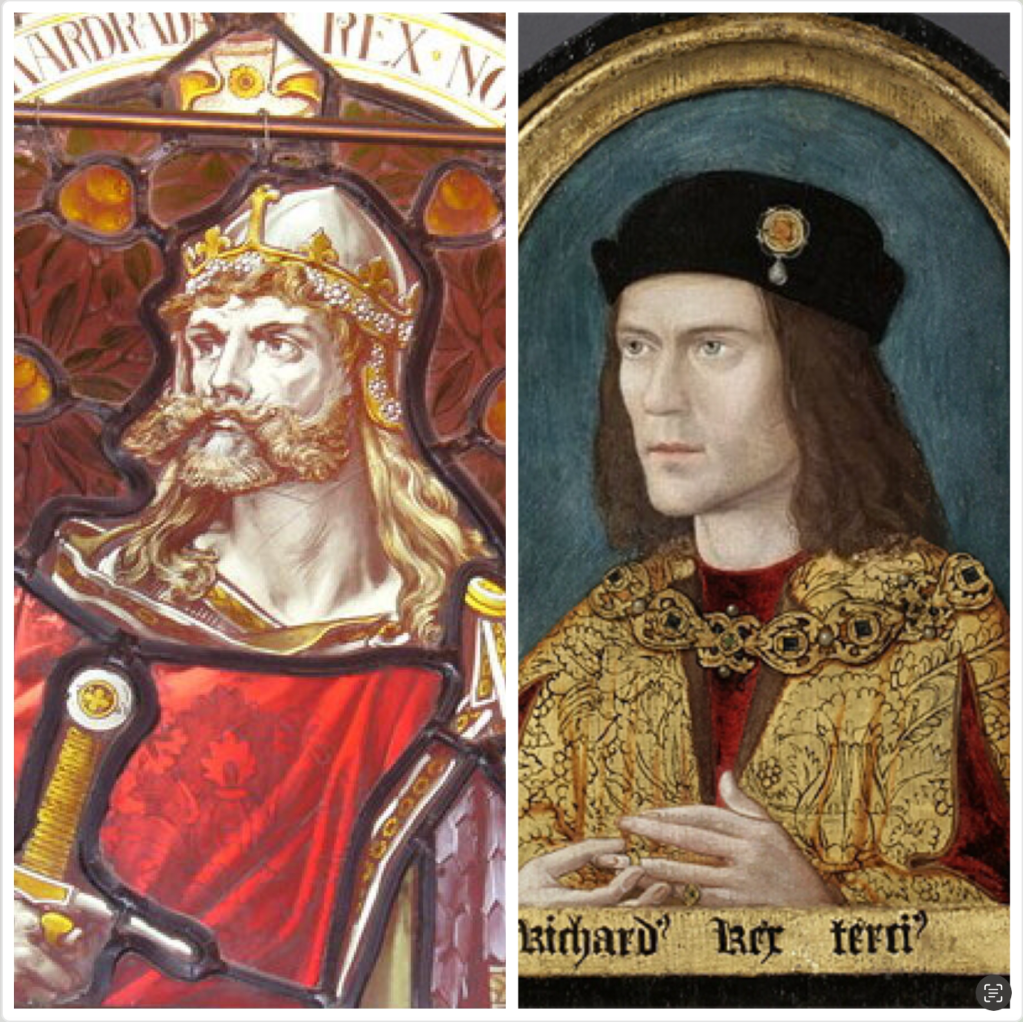
The Last Battle, the End of an Era, and Both Were Third of Their Name
Both Harald and Richard were the third of their name. Harald ascended the throne as Harald III, while Richard became Richard III.
Moreover, both met their end on the battlefield and were the last monarchs of their lands to die in combat.
Richard III fell at Bosworth in 1485, the last English king to die on the battlefield, marking the end of the English Middle Ages. Harald Hardrada, on the other hand, was killed at Stamford Bridge in 1066, in his attempt to claim the English throne. His death marked the end of the Viking Age, as his successors no longer sought military expansion on such a scale. After him, no other Norwegian king fell in battle, making him the last sovereign of Norway to die on the field.
Both faced opponents who would change history: Harald against Harold Godwinson, Richard against Henry Tudor.
Men of War and Strategy
Both were skilled commanders, hardened by the fires of battle.
Harald Hardrada spent decades fighting, from the Rus’ of Kiev to Constantinople, where he served in the Varangian Guard. Richard III, though younger, was a brilliant strategist who distinguished himself in the Wars of the Roses and earned the loyalty of the North. Both were highly respected by their men.
Posthumous Demonization
After their deaths, their legacies were distorted by their victors.
Richard III was turned into a hunchbacked and fratricidal monster by Shakespeare, Thomas More, Polydore Vergil (etc etc etc), and Tudor propaganda, reducing him to a cruel and deformed caricature.
Harald Hardrada, on the other hand, was described as a brutal and ambitious king, when in reality, he was a capable ruler who brought wealth and stability to Norway.
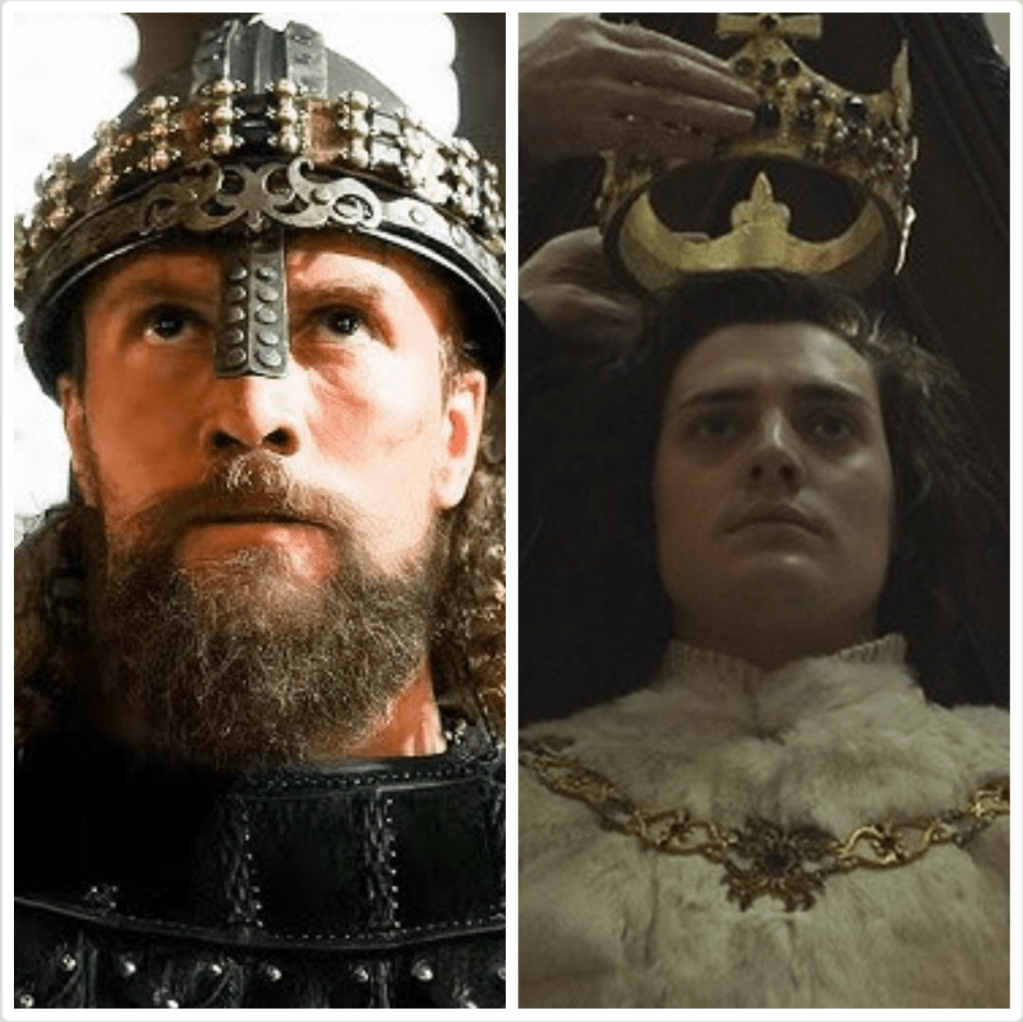
[Leo Suter (Harald III) in Vikings: Valhalla – Aneurin Barnard (Richard III) in The White Queen]
Mysterious Burials
Centuries after their deaths, the fate of their remains tells very different stories.
In 2012, Richard III was discovered beneath a parking lot in Leicester, after having been buried anonymously in the Grey Friars Monastery, which was later destroyed by the Tudors. His rediscovery allowed for the rehabilitation of his historical image.
Harald Hardrada, however, remains lost to history. Archaeologist Øystein Ekroll, after the discovery of Richard’s remains, hoped that the interest in the English king’s search would spread to Norway, since Harald was likely buried anonymously in Trondheim, beneath what is now a public street. A recovery attempt in 2006 was blocked by the Norwegian Directorate for Cultural Heritage.
A Legacy That Endures
Despite lies and damnatio memoriae, both have been rediscovered, though in different ways.
Richard III has finally been recognized, while Harald Hardrada remains an enigma, buried beneath Norwegian soil, waiting for a rediscovery that we can only hope will one day come.
Perhaps history does not repeat itself; perhaps it is merely a reflection of many other stories. But one thing is certain: some destinies echo through the centuries and always find a way to return.
P.S. If Harald had not died at Stamford Bridge and had ascended to the English throne, Richard III would never have been born.
Like this? Support my work on Ko-fi and help me tell the stories no one else dares to: https://ko-fi.com/elizabethrasicci
 Beyond Death
Lascia un commento