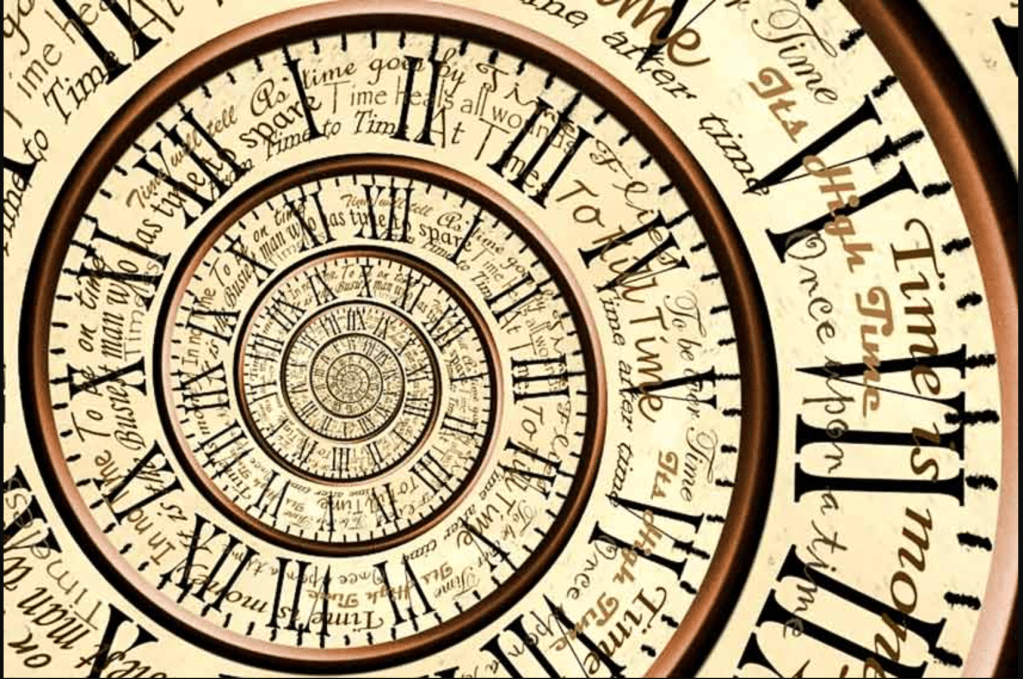
We are accustomed to thinking of history as a sequence of events unfolding progressively. However, if we closely examine the past, recurring patterns emerge—events that repeat with unsettling precision, leaving us with one fundamental question: could time be circular?
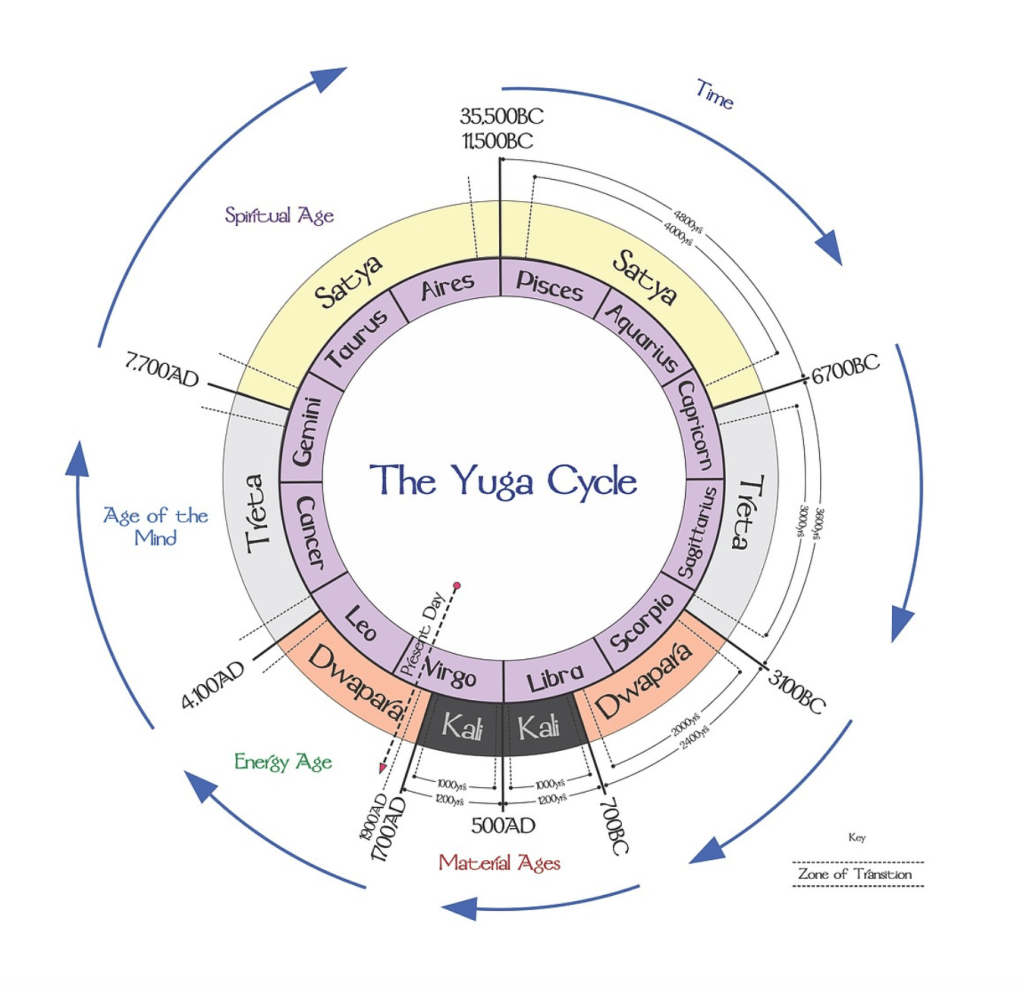
Various civilizations have believed in the cyclical nature of time. In ancient India, the concept of kalpa and the Yuga cycles describe the eternal recurrence of eras. The Maya, with their circular calendar, viewed time as a succession of epochs that continuously regenerate. Even in Greek philosophy, Plato and the Pythagoreans suggested that history repeats itself in great cycles.
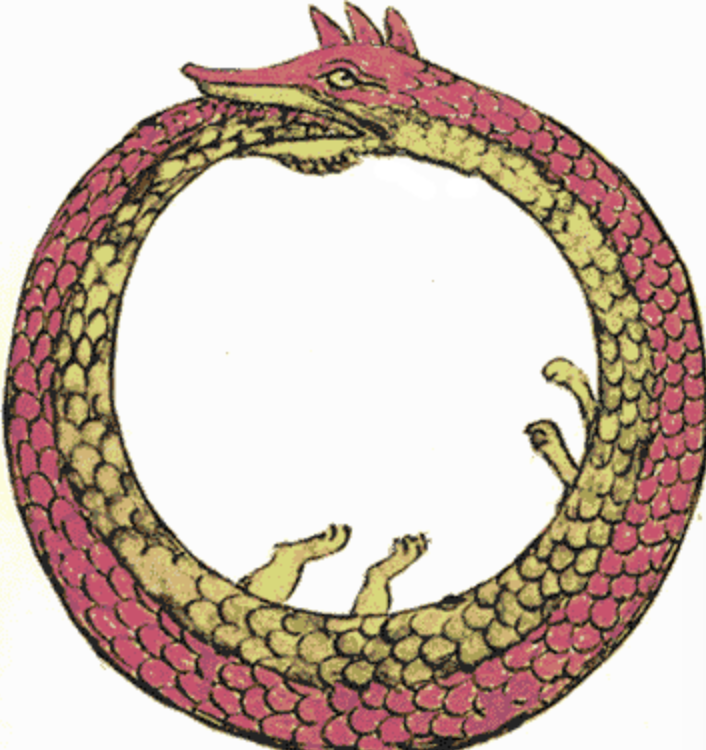
In historical reality, this concept seems to hold true. Empires rise, reach their peak, and then inevitably decline, only to be replaced by new powers that follow the same trajectory. Revolutions appear with similar mechanisms in different contexts. Likewise, economic crises reemerge with astonishing regularity.
We live with the idea that history is an unstoppable march toward progress, a climb toward a better future. But what if this notion is merely an illusion?
What happens when we critically observe the past?
- The same mistakes are repeated: wars, economic crises, the collapse of empires.
- The illusion of a more just and democratic society often gives way to new forms of oppression.
- Technological advancements improve our lives but also bring new challenges that resemble those of past eras.
If progress were truly linear, shouldn’t we have definitively overcome certain recurring issues?
If history is cyclical, does this mean the future is already written? Can we predict events by studying past cycles?
Some scholars argue that true “historical models” exist that allow us to foresee future crises. Thinkers like Oswald Spengler and Arnold Toynbee theorized that civilizations follow a cycle similar to that of the seasons: birth, growth, decline, and fall.
Perhaps we are not trapped in a predetermined fate, but we can use our understanding of cyclicality to avoid making the same mistakes. If we recognize the signs of the past, can we influence the course of future events?
Let me illustrate some examples of how history appears to follow a cyclical pattern, demonstrating that remarkably similar events tend to repeat over time. Then, draw your own conclusions and tell me what you think…
- The Spanish Flu (1918-1920) and the COVID-19 Pandemic (2019-2021)
Two global pandemics that transformed society, the economy, and daily life, triggering similar governmental responses and severe economic consequences.
- Napoleon (1804-1815) and Hitler (1933-1945): The Fatal Russian Mistake
Both leaders sought to conquer Europe and ultimately lost everything when they attempted to invade Russia, underestimating the harsh winter and the resilience of the local population.
- Abraham Lincoln (1860) and John F. Kennedy (1960): Two Presidents and Eerie Coincidences
Both were elected exactly one century apart, both were assassinated with a shot to the head on a Friday, both were succeeded by a vice president named Johnson. Lincoln’s secretary was named Kennedy, and Kennedy’s secretary was named Lincoln. Booth, Lincoln’s assassin, fled from a theater and was found in a warehouse; Oswald, Kennedy’s assassin, shot from a warehouse and was found in a theater.
- The French Revolution (1789) and the Russian Revolution (1917): Same Mechanisms, Same Outcome
Both revolutions overthrew a monarchy, led to radical regimes, and culminated in an authoritarian leader taking power—Napoleon in France, Stalin in Russia.
- The Rise and Fall of Empires: Rome, Byzantine, British, American?
Every great empire has followed a similar cycle of expansion, peak, and decline. Today, many wonder whether the United States is approaching the critical turning point in this trajectory.

Fascinating, isn’t it? But if this is true, does it mean we are all trapped in an endless cycle, incapable of recognizing the obvious (which, frankly, wouldn’t be hard to believe)? Or perhaps our epigenetic code is not as advanced as we like to think. Or maybe, it suggests that we should leave clear guidance for our children and grandchildren to help them avoid making the same mistakes. After all, isn’t that the purpose of studying history?
Or perhaps the truth lies somewhere in between. Time may not be entirely linear, nor perfectly circular, but something more complex—like a spiral: events repeat, but each time with subtle variations, adapting to the circumstances of the moment.
This perspective gives us hope: by acknowledging history’s cycles, we can strive to break the repetition of past mistakes and build a more conscious future.
So, the million-dollar question remains: are we truly destined to relive the same events, or can we break the cycle?
Like this? Support my work on Ko-fi and help me tell the stories no one else dares to: https://ko-fi.com/elizabethrasicci

 Beyond Death
Lascia un commento