
The Middle Ages, as we know, were a time when having many children was considered almost an obligation (let’s put it that way!). Because of this, the mortality rate for women due to pregnancy and childbirth was extremely high, around 50%. In other words, you either survived or died; there was no middle ground.
Today, I want to talk to you about the postpartum protocol followed during the Tudor era.
Right after birth, the baby’s umbilical cord was cut and treated with incense or powdered aloe before being left to dry. This step was considered crucial because the umbilical cord was believed to have magical protective powers. Some people even carried a piece of it as a talisman against witches (bleh!).
Next, the baby’s navel was examined because it was thought to provide clues about the mother’s future fertility. If the navel was wrinkled, it was said she would have more children; if it was smooth, she wouldn’t. (I wonder how often they got that right, huh? Oh well.)
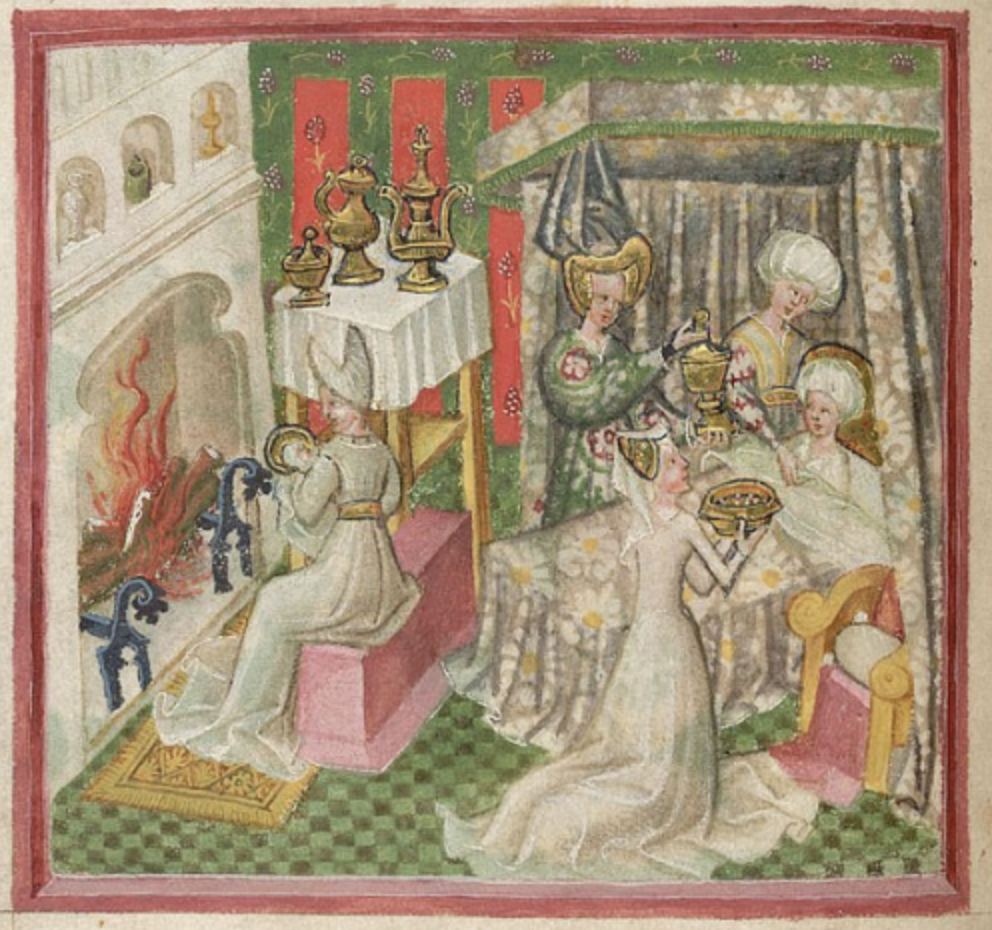
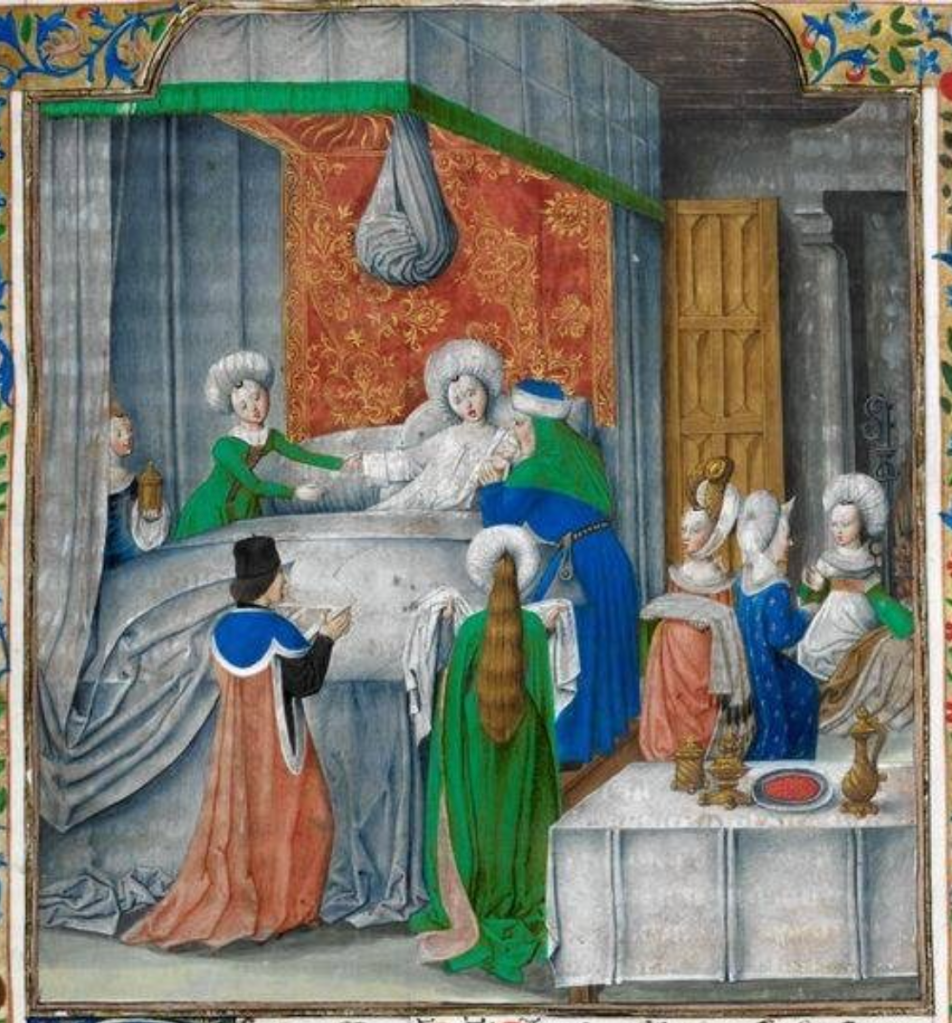
The newborn was then washed with a mixture of wine, herbs, milk, barley water, and sweet butter, and rubbed with almond, oak, or rose oil. This treatment was meant to protect the skin and prevent parasites from entering the pores. After the bath, the baby was tightly swaddled in a cloth to ensure the limbs grew straight, and they would usually remain in this rigid position for the first six months of life (I feel suffocated just thinking about it!).
After this period, the baby was dressed in a short coat, similar to the long dresses worn by girls. Regarding feeding, the newborn’s first nourishment wasn’t breast milk (queens were forbidden to nurse their children, as it was believed to hinder conception and prevent them from fulfilling their “duties”). Instead, the baby’s first food was a spoonful of sweetened wine (does anyone else find this funny? I sure do!).
The wet nurse wasn’t chosen randomly; on the contrary, her role was vital. She had to have recently given birth, preferably to a boy, as it was believed that the sex of her child influenced the quality of her milk, making it better. Furthermore, she had to have a kind and impeccable character, as it was thought that the baby could absorb the nurse’s virtues, or vices, through her milk.
Meanwhile, the mother’s breasts were tightly bound to stop lactation (and I can only imagine the pain… cursed practices!).
Do you have any other information about this? In the meantime, I’m becoming more and more convinced that, despite the political madness of this dark century, I was lucky to be born in 1989 and not during the Middle Ages.
Like this? Support my work on Ko-fi and help me tell the stories no one else dares to: https://ko-fi.com/elizabethrasicci

 Beyond Death
Scrivi una risposta a Mason Cancella risposta