
Every year on October 31st, for the past thirty-six years now (at least in this earthly life of mine), I’ve heard people criticize the day of Samhain, or Halloween as it’s now called, in the most absurd ways imaginable.
Some call it an evil day, devoted to the devil; others dismiss it as nothing more than what American culture has turned it into: pure commercialism, all horror and candy.
But in truth, as so often happens, what we think we know and what really is are two very different things.
In the Middle Ages, for example, death was no taboo. On the contrary, it was part of everyday life. People lived knowing perfectly well that they could die at any moment. Death was a porous boundary, a constant shadow, but also a promise of return.
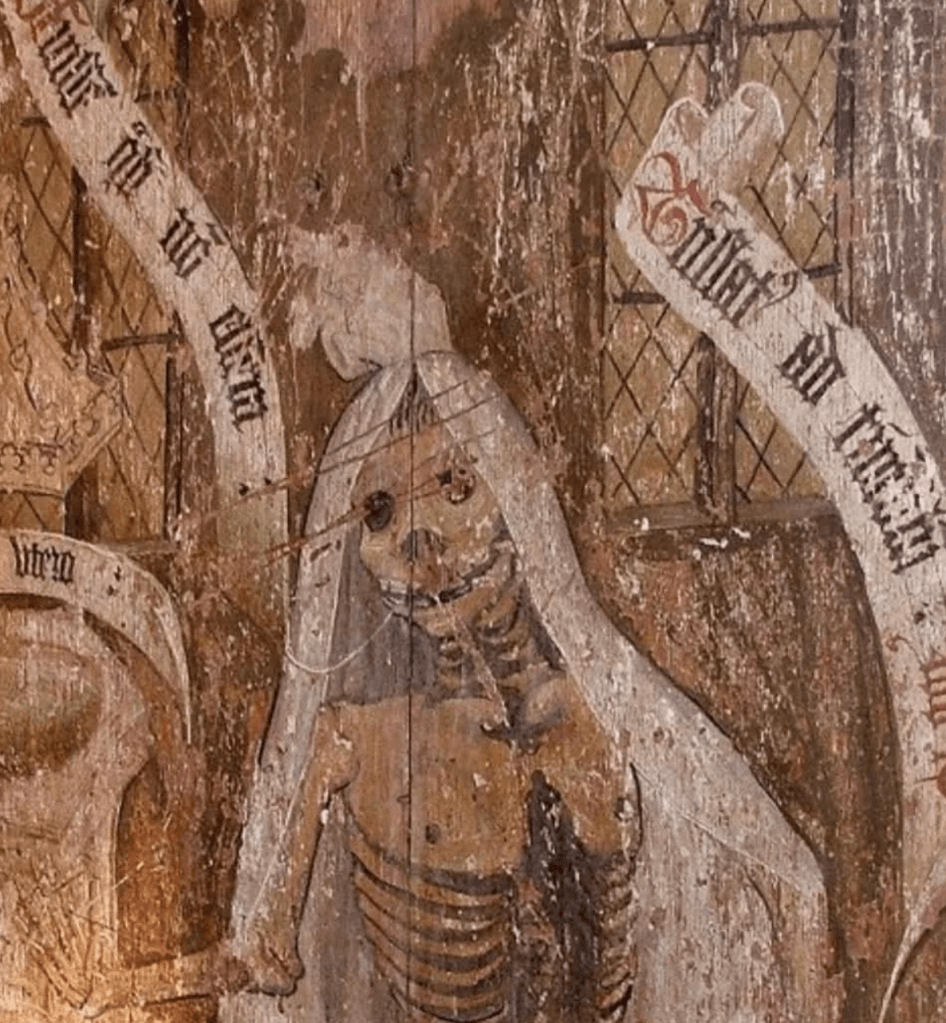
Cemeteries stood beside churches; the dead were remembered during Mass, and often within the home itself, in family books, in confraternity registers, in the candles lit in their name.
November 1st and 2nd, the two days dedicated to All Saints and All Souls, were among the most deeply felt dates in the Christian calendar. They were born in a monastic context, at the Abbey of Cluny around the year 1000, when Abbot Odilo of Cluny decided to dedicate an entire day to the commemoration of all the faithful departed, so that no soul would ever be forgotten. It was a spiritual intuition, but also a profoundly human one: to remember the dead was to recognize that the community of the living did not end with earthly life.
Every church, every village began to devote one day a year to their own departed, and November 2nd became the official date of the Commemoration of All Souls.
In medieval towns, that day carried a suspended, solemn atmosphere. The bells tolled slowly, families made their way to cemeteries bearing small gifts, bread, wine, lit candles, and the poor received alms “in the name of souls.” The gesture was simple yet full of meaning: to share bread with the hungry was also to nourish the dead, who were believed to find comfort in acts of charity.
Liturgical manuscripts from the period speak of commemorative masses and readings, but also of more “popular,” less canonical customs. In some parts of Europe, people kept lights burning all night, a kind of domestic vigil, so that souls might find their way home. Elsewhere they baked “soul breads”, small blessed loaves distributed to the poor or left upon graves, symbols of a bond that not even death could sever.
The medieval world, with its blend of mysticism and practicality, perceived November 2nd as a threshold. It was believed that on those days the “veil” between the living and the dead grew thin, a liminal moment when the two realms could touch. The echo of ancient pre-Christian beliefs, such as the Celtic Samhain, survived in popular thought: the night between October and November was the time when wandering souls returned to visit the places they had once loved.
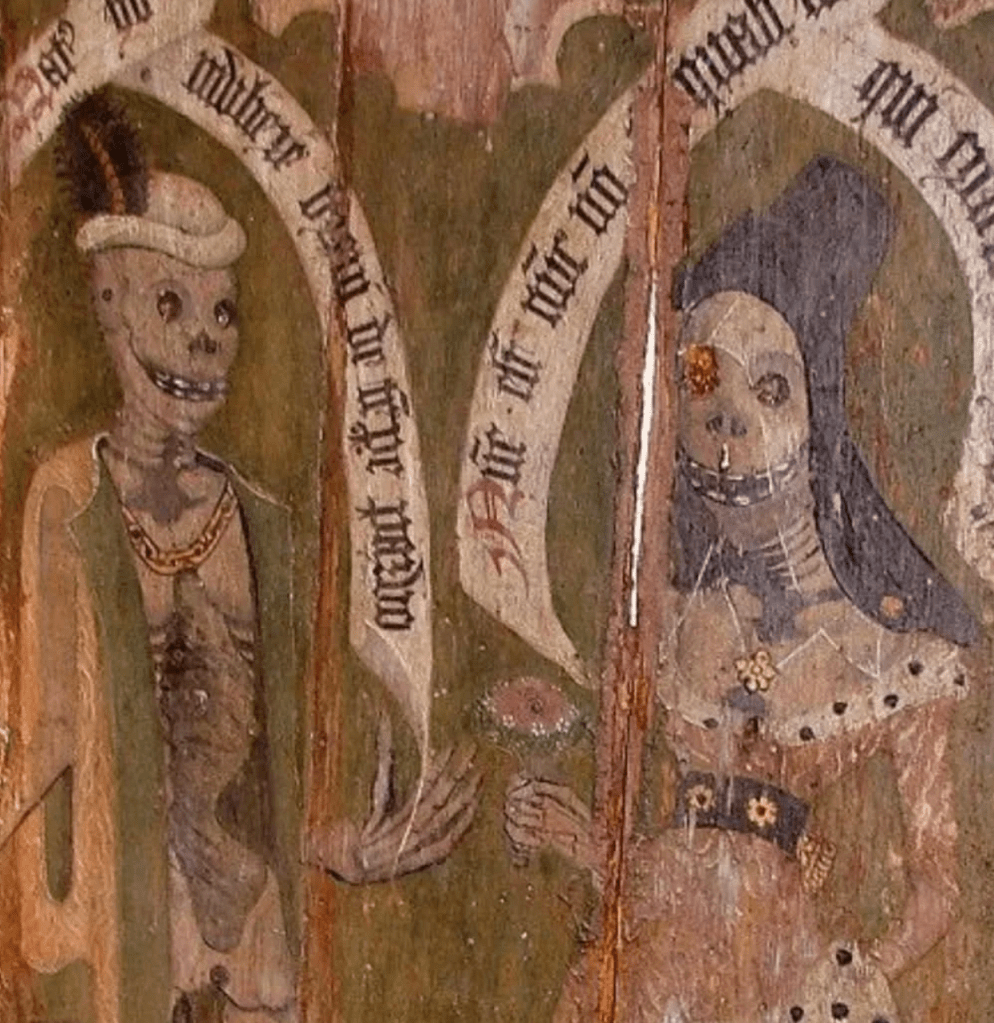
In certain Benedictine monasteries it was customary for each monk, on All Souls’ Day, to write the name of a deceased brother on a small slip of parchment; those names were read aloud during evening prayer, a ritual that honored the strength of collective memory.
In medieval English villages, children went from house to house asking for soul cakes, small buns offered “for the souls in Purgatory”, in exchange for a prayer. It’s a custom that, centuries later, would evolve into today’s trick or treat. (So, hey… tell your kids that what they’re doing has truly ancient roots!)
Some French chronicles from the thirteenth century recount that, on the night between November 1st and 2nd, those who ventured into the streets might hear invisible processions of the dead: a silent cortege known as la mesnie Hellequin, “the host of Hel”, a haunting remnant of old Norse myths.
In the Middle Ages, then, All Souls’ Day was not merely a religious observance: it was a way of keeping the bond with the departed alive. A gesture of piety, but also of continuity. To pray for the dead was to believe that life did not end with death.
Today, among candles and cemetery visits, traces of that ancient vision remain, the need to feel part of something greater, a thread that connects generations and centuries.
Perhaps, after all, the medievals were not so different from us: they too sought, in the darkness of November, a way to bring light to their dead, and, in doing so, to celebrate the living.
 Beyond Death
Lascia un commento