
1792.
We are in the heart of the French Revolution. The Tuileries are under siege. Among the many items stolen, torn apart, thrown away, or burned… someone takes a small notebook, bound in 82 pages.
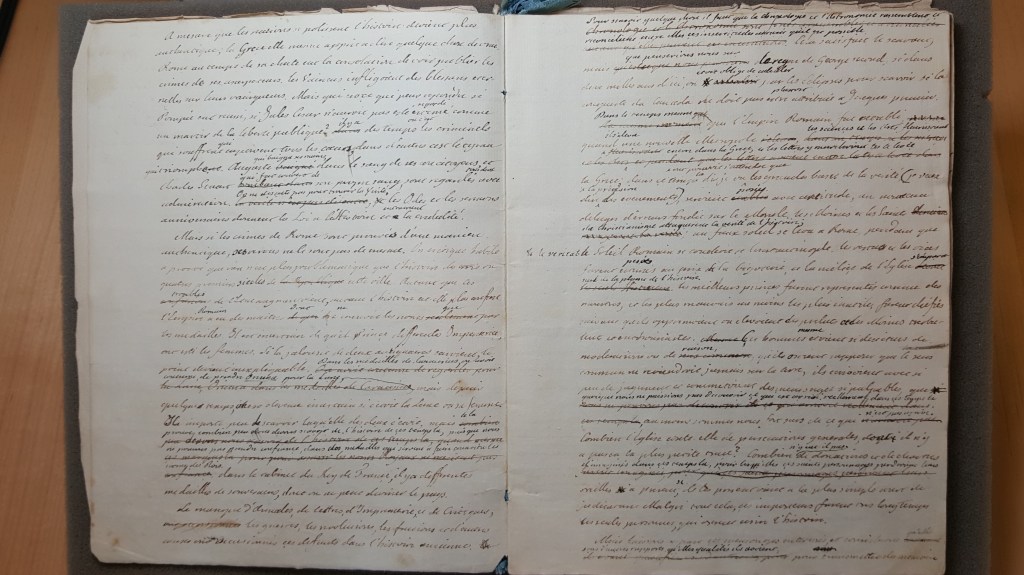
Inside, the handwriting is tiny and precise. No one could have imagined what it contained.
That manuscript survived the laceration of the Revolution.
It survived the flames, censorship, and the passing of time…
By sheer chance, it ended up in the hands of a Parisian publisher. Then it passed through those of a countess, a collector, and an auction house.
It embarked on a long, silent journey all the way to the Lewis Walpole Library in Connecticut, where it rests today.
Survivor of everything, like those faint traces history tries in vain to erase.
And what did it contain? A French translation of Horace Walpole’s work on Richard III. But the extraordinary part is this: that translation was written by the hand of Louis XVI himself.
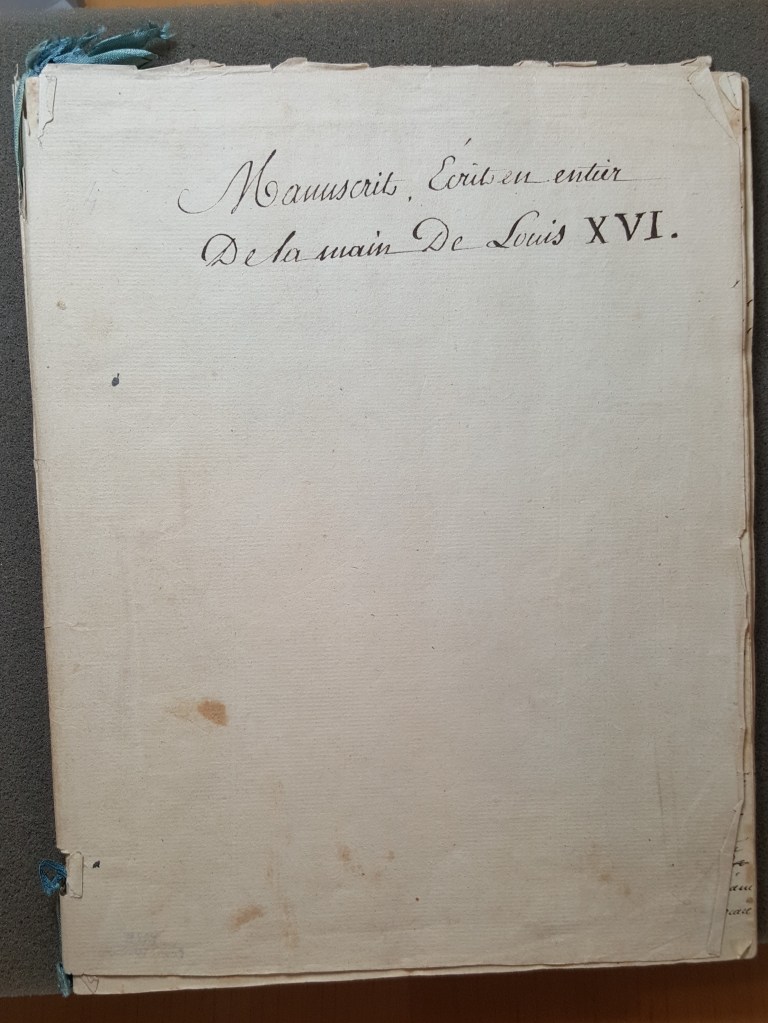
When you find yourself in front of certain things, you can’t help but shiver. And not just because we’re looking at two fallen kings, separated by exactly three centuries…
But because both were betrayed, scorned, condemned to an infamous death.
And above all, because in that act, in the act of one king translating another, there is something greater.
A human gesture. An existential one.
Louis XVI began his translation in 1789, just as the world around him began to crumble. While crowds screamed under his windows with pitchforks and burning torches,
he sat in silence, took an English book in his hands, and translated every word into his own language.
As if to better understand it. As if he hoped to share it with his people.
The book was Historic Doubts on the Life and Reign of King Richard III,
Walpole’s attempt to restore dignity to the most maligned king in history. No longer Shakespeare’s monster, but a man. A misunderstood sovereign, sacrificed to propaganda.
I often ask myself: What was Louis thinking, while translating it? What drove him to do it?
Perhaps, in that moment, he saw himself between the lines. Or perhaps he sensed that time would hand him the same fate.
When we come face to face with that manuscript, one thing strikes us immediately: the handwriting.
A tiny, meticulous script. Page after page, every space filled. No flourishes, no pauses. Just words, dense and relentless.
As if time were running out. As if each sentence were an attempt to hold on to meaning, to breath, to dignity.
Some have suggested that the second half of the manuscript contains fewer corrections because the king had grown more confident. Others believe Louis knew his time was almost up.
That he felt the urgency. That he wanted to finish, before everything truly ended.
And here we come to the question everyone must have already asked:
Why did Louis XVI, of all kings, choose Richard III?
Perhaps because Richard had been killed twice: once at Bosworth, and once in memory. Because his body had been treated and buried like trash.
Because he had been turned into a monster, a convenient demon for the victors.
Louis must have known that soon he, too, would be spoken of in the worst possible way.
Because History has no mercy for the defeated. And so, in trying to save Richard, perhaps he was trying to save himself.
Every time I think of that manuscript, snatched by a mob, hidden, sold, rediscovered, I always picture two ghosts looking at each other across the centuries.
Richard and Louis. Two mirrored destinies. One telling the story of the other, so as not to disappear alone. And in that ink-written prayer, it’s impossible not to hear the fears, the echoes of inevitability.
Something that resembles the need to be understood, to hold on to something, even when everything collapses.
Like this? Support my work on Ko-fi and help me tell the stories no one else dares to: https://ko-fi.com/elizabethrasicci
 Beyond Death
Lascia un commento