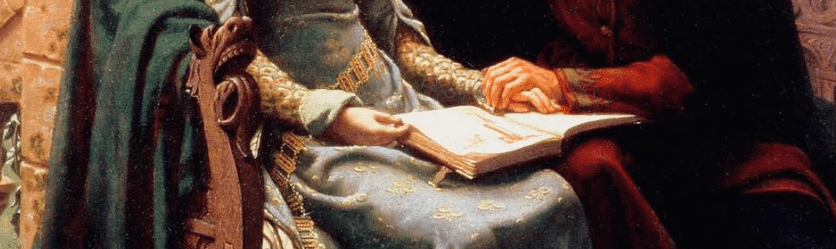
The landscape of love stories that have shaped history is vast, immense even, but few are as poignant and intense as that of Abelard and Héloïse. Theirs was a forbidden, painful, and contested love, yet one that left an indelible mark on literature and Western thought.
But who were Abelard and Héloïse?
Peter Abelard was one of the most brilliant philosophers and theologians of the 12th century. Handsome and incredibly learned, his fame extended far beyond the borders of France, attracting students from all over Europe. It was this very renown that brought him into the life of Héloïse, a young woman of extraordinary intelligence, educated by her uncle Fulbert, a canon of Notre-Dame Cathedral in Paris.
“What queen, what powerful woman did not envy my joys and my bed? You possessed two gifts in particular that made you immediately dear: the grace of your poetry and the charm of your songs, truly rare talents for a philosopher such as yourself.”
“You were everything to me—more than a husband, more than a lover, more than a lord; you were my entire world, my only joy. There is not a single day in which I do not weep at the memory of our nights.”
Fulbert was well aware of his niece’s exceptional intellect, a truly extraordinary gift in an era when female education was nearly nonexistent. While most women barely knew how to read and write, Héloïse shone for her erudition and wit, a rare gem in the medieval world. Fascinated by her intellectual abilities, Fulbert entrusted her education to Peter Abelard so that he could further refine her knowledge.
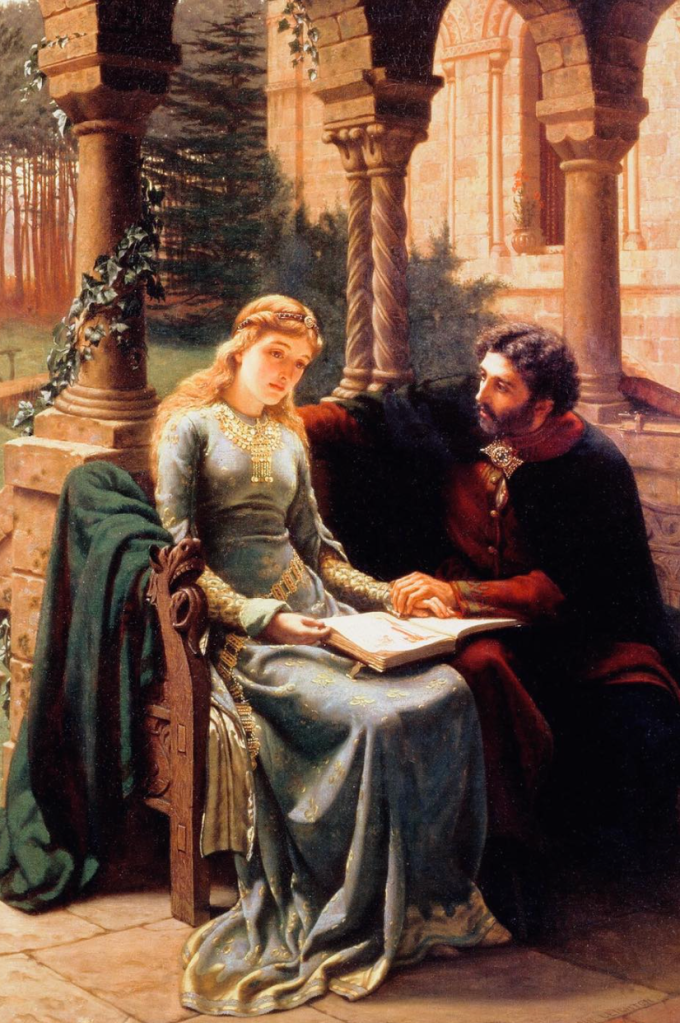
But, to borrow Dante Alighieri’s words, “galeotto fu il libro” (“the book was the go-between”)…
What should have remained a purely academic relationship soon turned into an uncontrollable passion. Between lessons and exchanges of ideas, a secret and all consuming love was born, unfolding within the walls of Fulbert’s house, who was, at least initially, oblivious to what was happening under his own roof.
“God alone knows if ever, in my actions or my thoughts, I sought anything other than you! I desired neither glory nor wealth; I aspired only to you, only you.”
The passion that engulfed Abelard and Héloïse was so overwhelming that Abelard forgot philosophy, forgot religion, and his intellect withered before the carnality of Héloïse. He began composing love songs that made him famous, and it was precisely this fame that made Fulbert suspicious.
“What can I tell you? Living under the same roof, our souls understood one another. Under the pretext of study, we abandoned ourselves completely to love, and it was study itself that offered those secret moments of solitude that love so desperately needs. Before open books, we spoke more of love than of philosophy, and kisses far outnumbered reasonings. My hands strayed more to her bosom than to the pages, and my eyes reflected the enchantment of love more often than they turned to our reading. To avoid the slightest suspicion, I sometimes struck her, but it was out of love, not anger; for pleasure, not out of fury, pleasure sweeter than any balm. What more can I say? Slowly, we indulged in every degree of love, neglecting none, and if love ever invented any new pleasures, we granted them to ourselves. The more inexperienced we were, the more ardently we lingered in our enjoyment, never tiring of it. But the more I was possessed by this enchantment, the less I could dedicate myself to philosophy and teaching. Going to school and staying there had become unbearably tedious for me; just as it was exhausting, after sleepless nights of love, to focus on study by day. In class, I became so careless and indifferent that I no longer said anything brilliant, everything that left my lips was mere repetition. I had become nothing more than an echo of what I had once created, and if I ever composed anything new, they were love songs, not doctrines reserved for philosophers. Many of these songs, as you well know, are still sung and spread throughout many lands, especially among those for whom life in love is the most beautiful fate.”
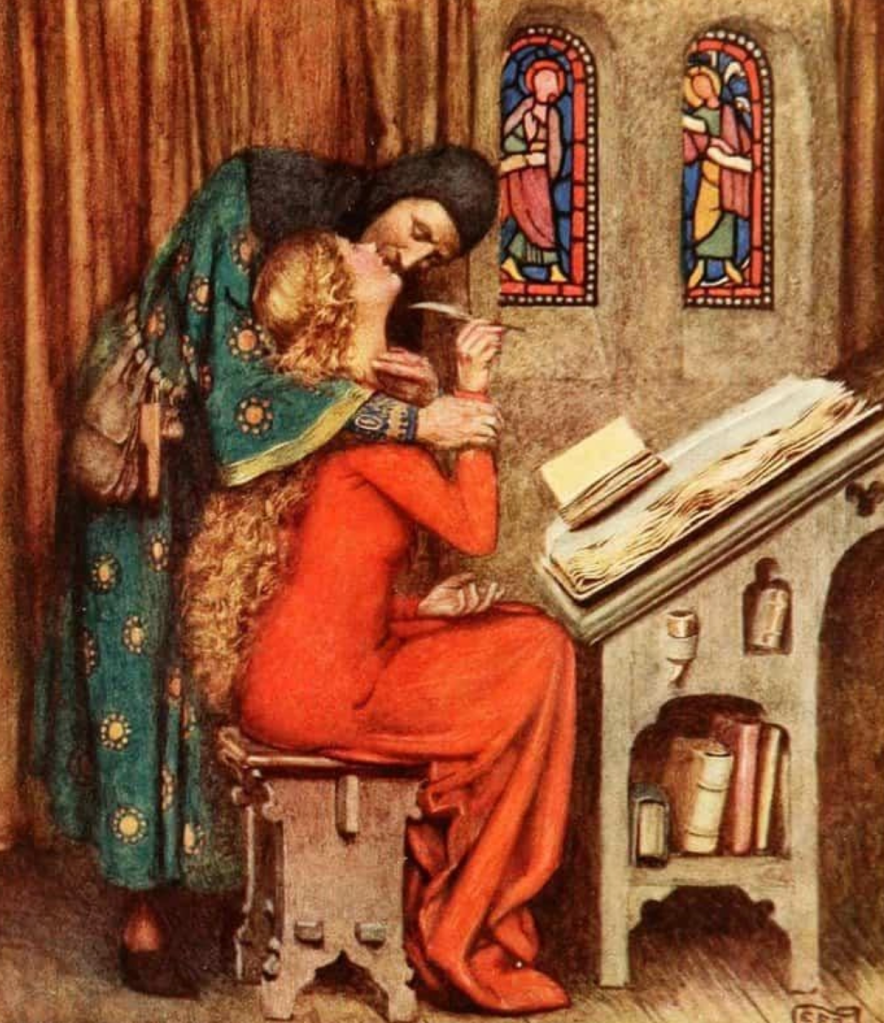
When Fulbert discovered the relationship, he reacted with fury, but the situation became even more complicated when Héloïse found out she was pregnant. To avoid scandal, Abelard took her to Brittany, where she gave birth to a child, Astrolabe. Back in Paris, the philosopher sought to mend the situation by proposing a secret marriage, but Héloïse refused, fearing it would compromise Abelard’s career and knowing it would not save them in the eyes of the world.
Nevertheless, the marriage took place, and when Fulbert found out, he felt betrayed and humiliated to such an extent that he orchestrated the cruelest revenge: one night, he sent men to break into Abelard’s room and had him mercilessly castrated. This tragedy marked the end of their earthly union, but not of their spiritual bond.
“If the name of wife had united us, perhaps our bond would have been weaker than this one, which misfortune has made eternal. I am yours, only yours, in this world and beyond.”
After the mutilation, Abelard withdrew to a monastery, becoming a monk at Saint-Denis, while Héloïse, at Abelard’s own insistence, took vows and became an abbess at Paraclete. But their love never faded. Through their letters, they exchanged profound and heartbreaking reflections on faith, love, and destiny. The Letters of Abelard and Héloïse remain one of the most powerful epistolary testaments of medieval literature, an expression of a sentiment that transcended time and flesh.
“In me still burns the flame of desire, a fire no prayer can extinguish. Your image haunts my dreams, your voice echoes in my chest.”
Today, the tombs of Abelard and Héloïse rest side by side in the Père Lachaise Cemetery in Paris, united as they were in their hearts, even if separated in life. It is said that when Héloïse died, Abelard’s body opened its arms to welcome her in an eternal embrace.
Abelard and Héloïse are not merely a chapter in the history of medieval love, but the symbol of a bond that neither suffering nor social conventions could sever. Perhaps they serve as a reminder that love overcomes all obstacles, even time itself.
“I wish that my soul could be freed and fly to you, wherever you may be. You were, are, and always will be my only love.”

Like this? Support my work on Ko-fi and help me tell the stories no one else dares to: https://ko-fi.com/elizabethrasicci
 Beyond Death
Lascia un commento