tudor
-

Today, on instinct, I decided not to write about history, but to share a thought that is particularly close to my heart. Do you know what the paradox of the soul is? Perhaps you’ve experienced it too, without ever being able to name it. The paradox of the soul is that state in which you…
-

The Middle Ages, as we know, were a time when having many children was considered almost an obligation (let’s put it that way!). Because of this, the mortality rate for women due to pregnancy and childbirth was extremely high, around 50%. In other words, you either survived or died; there was no middle ground. Today,…
-
Il Medioevo, si sa, era un’epoca in cui fare molti figli era considerato quasi un lavoro (diciamo così!), e proprio per questo la mortalità femminile legata a gravidanze e parti era altissima: circa il 50%. Insomma, o sopravvivevi o morivi, non c’erano vie di mezzo. Oggi voglio parlarvi del protocollo post-partum seguito all’epoca dei Tudor.…
-

Tonight, I couldn’t sleep (a strange occurrence, really, since I can usually sleep anytime, anywhere!). As my mind wandered between one thought and the next, it inevitably returned to one of my obsessions: the “What ifs” of history. If you’re not familiar with the term, let me explain briefly: “What ifs” are hypothetical scenarios that…
-
Stanotte non riuscivo a dormire (strano, davvero, perché io dormo sempre e ovunque!) così, tra un pensiero e l’altro, la mia mente è tornata a una delle mie ossessioni: i “What if” della storia. Se non li conoscete, ve lo spiego brevemente: i “What if” (“E se…” in italiano) sono scenari ipotetici che esplorano cosa…
-
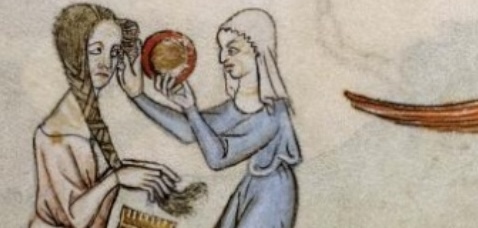
In the Middle Ages, kings and queens used perfumes both to distinguish themselves and for hygienic purposes. However, the fragrances of the time were generally simple, often derived from natural ingredients that were either locally sourced or imported from distant lands. There is historical evidence and references to the use of perfumes, essential oils, and…
-
Nel Medioevo, re e regine utilizzavano profumi sia per distinguersi che per ragioni igieniche. Le fragranze dell’epoca, però, erano generalmente semplici, spesso ricavate da ingredienti naturali locali o importati da terre lontane. Esistono prove storiche e riferimenti all’uso di profumi, oli essenziali e acque aromatiche da parte della nobiltà medievale, anche se non con la…
-

I have always found the concept of a motto fascinating, a short phrase that encapsulates everything a person represents and wants to convey to others. In royal families, every member had a motto, and often more than one, as these would change depending on the role they held. It was not uncommon, for example, for…
-
Ho sempre trovato affascinante il concetto di motto, una breve frase che racchiude tutto ciò che una persona rappresenta e che vuole trasmettere agli altri. Nelle famiglie reali, ogni membro aveva un motto, e spesso più di uno, poiché questi cambiavano a seconda del ruolo ricoperto. Non era raro, ad esempio, che un sovrano cambiasse…
-
Dopo la sua morte, il corpo di Riccardo III fu portato a Leicester, nudo e con le mani legate davanti a sé, come se fosse stato il peggiore dei traditori. Il suo corpo portava i segni dei colpi inferti dai mercenari Tudor e dai traditori Stanley, oltre a numerose ferite post-mortem, atti deliberati di disprezzo…
 Beyond Death