middle ages
-

WARNING: LONG POST – Reading time: 5 minutes if you read fast 😀 I often hear people say that the marriage between Elizabeth of York and Henry VII was, despite being political, also a love match. Apparently, he was deeply attached to his wife, respected her, and when she died, he spent a fortune on…
-
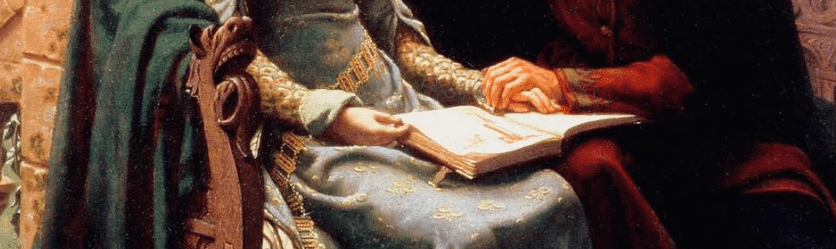
The landscape of love stories that have shaped history is vast, immense even, but few are as poignant and intense as that of Abelard and Héloïse. Theirs was a forbidden, painful, and contested love, yet one that left an indelible mark on literature and Western thought. But who were Abelard and Héloïse?Peter Abelard was one…
-

It was around 9 p.m. when Elizabeth died. After giving birth to her daughter Katherine, she endured almost two weeks of agony, excruciating pain, fever, and relentless hemorrhages led her to her death on February 11, 1503. February 11 was also her birthday. She had just turned 37. Elizabeth was the eldest daughter of King…
-

It was February 4, 2013. 11:00 was fast approaching, and there was a palpable buzz at the University of Leicester. In that room, there were journalists, historians, enthusiasts, scientists… everyone, absolutely everyone, ready to bear witness. Let’s go back six months. On August 25, 2012, beneath the cold concrete of a private parking lot in…
-

If I said the word “godemiché” what would come to mind? Wait, let’s take a step back. In ancient Greece and ancient Rome, sexual satisfaction was considered a fundamental aspect of life. Even then, objects designed exclusively for female pleasure existed, often with purposes that were not even too subtly voyeuristic. In short, pleasure was…
-
Se vi dicessi la parola “godemiché”, cosa vi verrebbe in mente? Aspettate, facciamo un passo indietro. Nell’antica Grecia e nell’antica Roma, la soddisfazione sessuale era considerata un aspetto fondamentale della vita. Già allora esistevano oggetti pensati esclusivamente per il piacere femminile, con scopi che non erano neanche troppo velatamente voyeuristici. Insomma, il godimento era un…
-

Today, on instinct, I decided not to write about history, but to share a thought that is particularly close to my heart. Do you know what the paradox of the soul is? Perhaps you’ve experienced it too, without ever being able to name it. The paradox of the soul is that state in which you…
-

The Middle Ages, as we know, were a time when having many children was considered almost an obligation (let’s put it that way!). Because of this, the mortality rate for women due to pregnancy and childbirth was extremely high, around 50%. In other words, you either survived or died; there was no middle ground. Today,…
-

Tonight, I couldn’t sleep (a strange occurrence, really, since I can usually sleep anytime, anywhere!). As my mind wandered between one thought and the next, it inevitably returned to one of my obsessions: the “What ifs” of history. If you’re not familiar with the term, let me explain briefly: “What ifs” are hypothetical scenarios that…
-
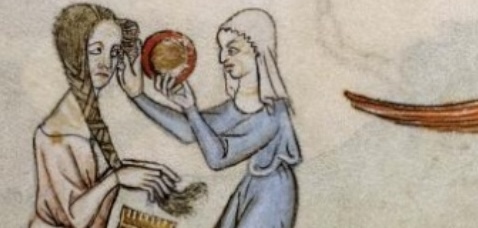
In the Middle Ages, kings and queens used perfumes both to distinguish themselves and for hygienic purposes. However, the fragrances of the time were generally simple, often derived from natural ingredients that were either locally sourced or imported from distant lands. There is historical evidence and references to the use of perfumes, essential oils, and…
 Beyond Death